How to Wash Pillows Safely Without Damaging Them
Learn how to wash pillows without damaging their filling or shape. Discover how to clean pillows by material, choose the right method and dry them well.

Pillows collect dead skin cells, body perspiration, cosmetic residues, and dust mites over time—even when protected by fresh pillowcases. While laundering your bed linen weekly is common practice, pillows themselves are frequently neglected until yellowing stains or musty odors appear.
Washing pillows incorrectly can break down delicate fibers, turn down feathers into dense clumps, or crack solid memory foam cores. Knowing how to wash pillows properly keeps your sleep environment hygienic while preserving neck support and loft. This practical guide walks you through care label diagnosis, machine washing protocols, material-specific cleaning guidelines, and safe drying techniques.
Memory Foam Alert
Never put solid memory foam or latex pillows in a washing machine or tumble dryer. Mechanical agitation tears the open-cell foam structure, and machine heat can melt or permanently deform the core. Spot-clean only!
What to Check Before Washing Your Pillows
Before tossing pillows into the laundry drum, perform this quick pre-wash checklist:
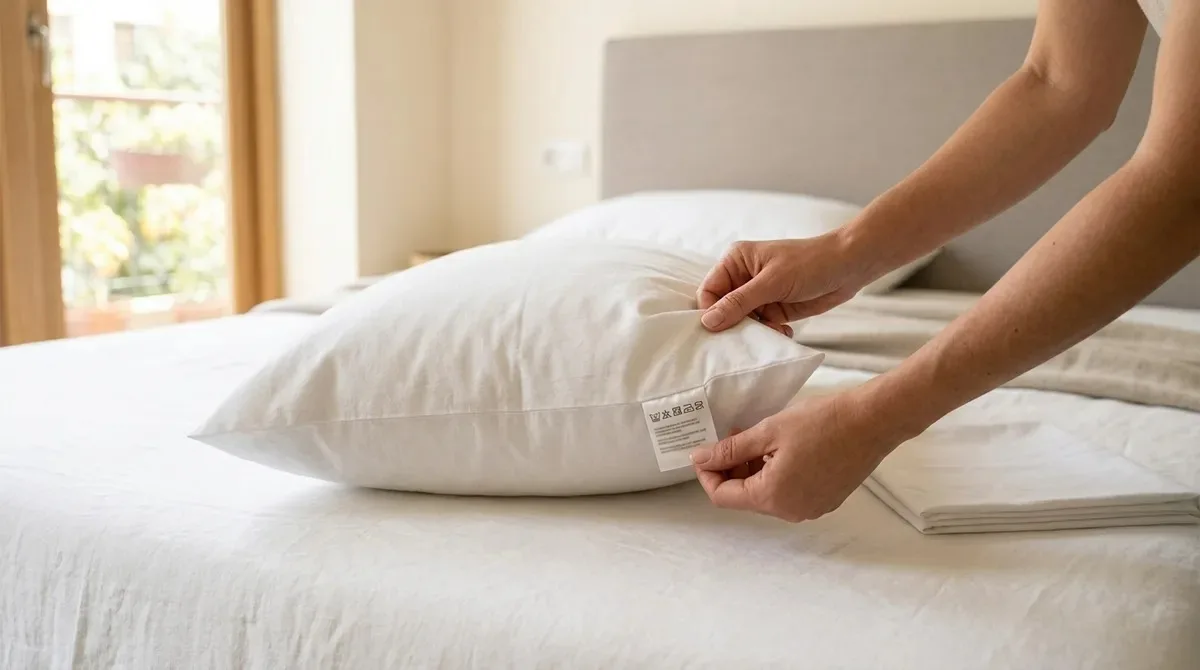
- Read the Care Tag: Distinguish between instructions for the removable quilted cover versus the actual pillow core.
- Identify the Core Filling: Polyester synthetic fibers, down/feather, solid memory foam, shredded foam, and buckwheat hulls all require vastly different care.
- Inspect Seams and Stitching: Check for frayed threads or holes. A ruptured seam in a washing machine will release thousands of down feathers or synthetic fibers into the pump filter.
- Pre-Treat Yellow Stains: Spray noticeable sweat stains with an enzyme-based stain remover or a paste of baking soda and mild liquid detergent fifteen minutes before laundering.
Pillow Material Cleaning Guide
| Filling Type | Machine Washable? | Recommended Cycle | Water Temp | Safe Drying Method |
|---|---|---|---|---|
| Synthetic / Microfiber | Yes | Gentle / Delicate | Warm (40°C) | Tumble dry low with wool dryer balls |
| Down & Feather | Yes (with caution) | Delicate / Wool | Cold or Warm | Tumble dry low (multiple cycles) until bone dry |
| Solid Memory Foam | No (Spot clean only) | Hand wipe surface | Cold water | Flat air-dry in shaded, ventilated room |
| Latex Core | No (Spot clean only) | Hand wipe surface | Lukewarm | Air-dry away from direct sunlight |
| Buckwheat Hulls | No (Cover only) | Remove hulls first | Cold | Air-dry empty cover; sun-air dry hulls |
How to Wash Pillows in a Washing Machine
For machine-washable synthetic and down pillows, follow this balanced loading method:
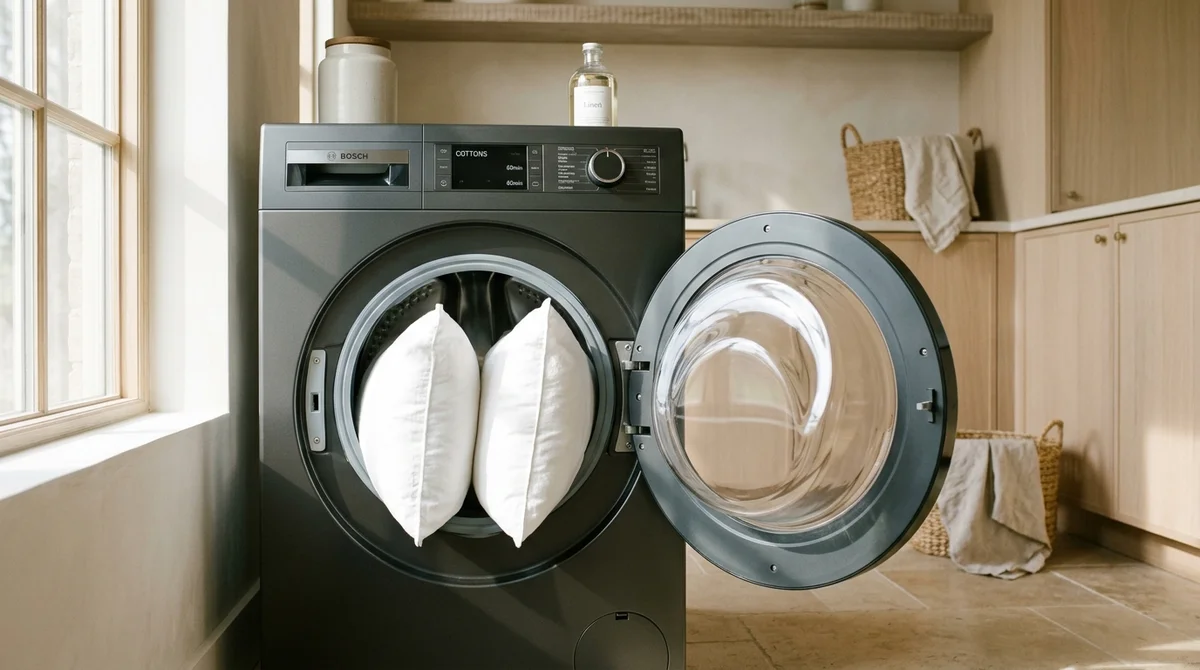
1. Always Wash in Pairs
Never wash a single pillow alone. A single waterlogged pillow throws the centrifugal balance of your washing machine off, causing loud banging and preventing the high-speed spin cycle from engaging. Laundering two pillows simultaneously distributes weight evenly across the drum.
2. Use Low-Sudsing Liquid Detergent
Powder detergents can fail to dissolve inside dense pillow batting, leaving gritty chalky deposits. Use half the normal dose of a gentle, low-foaming liquid detergent to ensure thorough rinsing.
3. Program a Delicate Wash with an Extra Rinse
Select the "Delicate", "Wool", or "Bulky Bedding" cycle with a gentle agitation speed. Always add an extra rinse cycle to purge any lingering soap suds trapped deep within the core fibers.
Cleaning Pillows Based on Their Core Filling
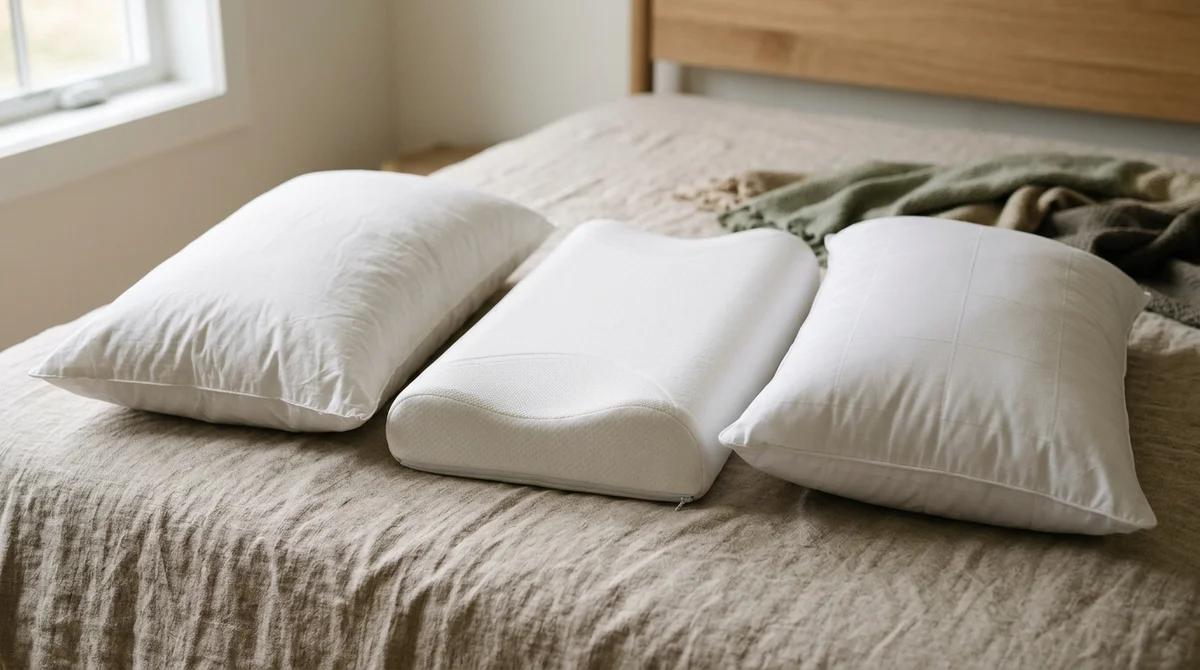
Synthetic Polyester and Microfiber Pillows
Synthetic pillows are the most forgiving. Wash them in warm water (40°C) to kill dust mites. After washing, gently knead the damp pillow by hand to redistribute any shifted batting before placing it in the dryer.
Feather and Down Pillows
Feather pillows require gentle, pH-neutral down-wash detergents that preserve the natural protective oils of the plumage. Avoid bleach or fabric softeners, which coat the delicate barbs and destroy their natural loft.
Memory Foam and Latex Pillows
Remove and launder the zippered outer cover. For the foam core, vacuum both sides with an upholstery brush attachment to remove dust and dander. If liquid has penetrated, blot the spot gently with a damp microfiber cloth dampened with mild soapy water. Never submerge foam in water.
How to Dry Pillows Without Clumping or Mildew
Drying is the most critical stage of pillow care. A pillow that feels dry to the touch on the surface may still harbor moisture deep in its core, leading to mold, mildew, and sour odors within 48 hours.

Tumble Drying Machine-Safe Pillows
- Set your dryer to Low Heat or Air Fluff. High heat can melt synthetic polyester strands or singe down feathers.
- Toss 3 to 4 wool dryer balls (or clean tennis balls tucked into cotton socks) into the drum. The balls vigorously pummel the pillows as they tumble, breaking up wet clumps and restoring airy volume.
- Down pillows often require two to three full drying cycles. Every 30 minutes, pause the dryer, remove the pillows, and vigorously fluff them by hand to check for hidden cold, damp clumps.
Air-Drying Delicate Fillings
For foam, latex, or air-dried pillows, place them flat on an open wire drying rack in a well-ventilated room with a cross breeze or near a circulating electric fan. Never hang heavy wet pillows by clothespins, as the hanging weight distorts their shape.
The Smell and Squeeze Test
Before making the bed, fold the pillow in half and give it a firm squeeze. If it feels heavy, cold in the middle, or emits a damp smell, continue drying. Only dress the pillow when it springs back instantly and smells completely neutral.
Frequently Asked Questions
Can I wash pillows in a top-loading washing machine with a central agitator?
It is best to avoid machines with tall central agitators. The agitator blades can snag pillow covers, rip seams, and compress internal batting unevenly. If using a top-loader, place the pillows vertically along the outer wall of the drum to keep them clear of the central spindle.
How often should pillows be washed?
Wash pillowcases weekly, machine-wash removable pillow protector covers once a month, and deep-clean the actual pillows every 3 to 6 months.
How do I remove stubborn sweat stains from pillows?
Create a paste of baking soda and 3% hydrogen peroxide, gently rub it into the yellowed areas with an old soft toothbrush, and let it sit for 30 minutes before running the pillow through a gentle wash cycle.
Can I dry clean my pillows?
Check the label carefully. While some vintage feather pillows permit dry cleaning, standard solvents can leave chemical fumes trapped in foam and polyester fibers that irritate sensitive airways. Water laundering is generally healthier.
When is it time to replace a pillow instead of washing it?
Fold your pillow in half and release it. If it remains folded flat rather than snapping back into shape, the internal support has permanently degraded. Standard polyester pillows should be replaced every 1–2 years; memory foam and latex typically last 3–5 years.
Related Articles
Explore more insights and stories from this category.

How to Build a Raised Garden Bed: A Step-by-Step DIY Guide
Learn how to build a raised garden bed with simple DIY steps. Explore material choices, soil preparation and practical tips for a sturdy garden space.

How to Declutter Your Home: A Simple Step-by-Step Guide
Learn how to declutter your home with a simple room-by-room plan. Use practical sorting tips to clear space and keep your home neat and organised.