How to Apply Under Eye Cream: Where, When and How Much
Learn how to apply under eye cream with the right amount, placement and timing. See how to use under eye cream gently and avoid common skincare mistakes.

You have invested in a targeted under-eye cream, but now comes the practical dilemma in front of the mirror. Should you smooth it right up against your lower lash line, layer it before or after your facial moisturiser, or reserve it strictly for bedtime? Even a minor application mistake can trigger burning, puffy morning eyes, or persistent milia.
The skin comprising your periorbital contour is the thinnest on your entire body—measuring roughly 0.5 mm thick, compared to up to 2 mm on the rest of your face. It possesses almost no oil-producing sebaceous glands and experiences continuous mechanical movement from thousands of daily blinks and facial expressions.
Learning how to apply under-eye cream correctly comes down to precise placement, micro-dosing, and featherlight tapping rather than aggressive dragging. This dermatological guide covers the orbital anatomy, step-by-step application protocol, day vs night timing, and key pitfalls to avoid.
The Dermatologist's Rule on Orbital Placement
Never apply eye cream directly onto your upper eyelids or right up against your lower eyelash waterline unless the formula explicitly specifies eyelid safety. Eye creams naturally migrate 1 to 2 centimetres with warmth and blinking; applying them along the bony orbital ridge allows the product to disperse safely without seeping into the ocular conjunctiva.
Where and How Much Under-Eye Cream Should You Apply?
Because periorbital tissue is so delicate and prone to fluid retention, placement and dosage dictate your results:
- The Orbital Bone: Feel the circular bony ridge that encases your eye socket. That is your application boundary. Begin just below the inner tearduct area and tap outward along the lower rim towards the temple.
- The Golden Dosage Rule: Use a rice-grain-sized dot shared between both eyes. Concentrated eye creams pack high lipid and active densities; over-applying overwhelms the skin, clogs hair follicles, and causes tiny white keratin cysts known as milia.
How to Apply Under-Eye Cream in 5 Simple Steps
| Step | Action | Best Practice | Key Avoidance |
|---|---|---|---|
| 1. Prep | Cleanse face & hands | Thoroughly remove mascara & eyeliner | Never rub with rough cotton rounds |
| 2. Dose | Single rice-grain dot | Divide between your two ring fingertips | Avoid dispensing directly from tube to eye |
| 3. Dot | Follow the orbital bone | Tap small micro-dots from inner corner outward | Stay away from the wet waterline |
| 4. Tap | Featherlight patting | Use gentle piano-tapping motions | Never drag, pull, or rub aggressively |
| 5. Settle | Wait 60 seconds | Allow lipid absorption before SPF or concealer | Don't apply heavy creams immediately |
Step 1: Cleanse Thoroughly and Wash Hands
Start with freshly cleansed, damp or dry skin. Thoroughly dissolve eye makeup with a gentle micellar water or cleansing balm. Avoid tugging with coarse cotton pads, which strains delicate periorbital capillaries.
Step 2: Measure a Rice-Grain Portion
Dispense a tiny, rice-grain-sized dot of cream onto the pad of your ring finger.
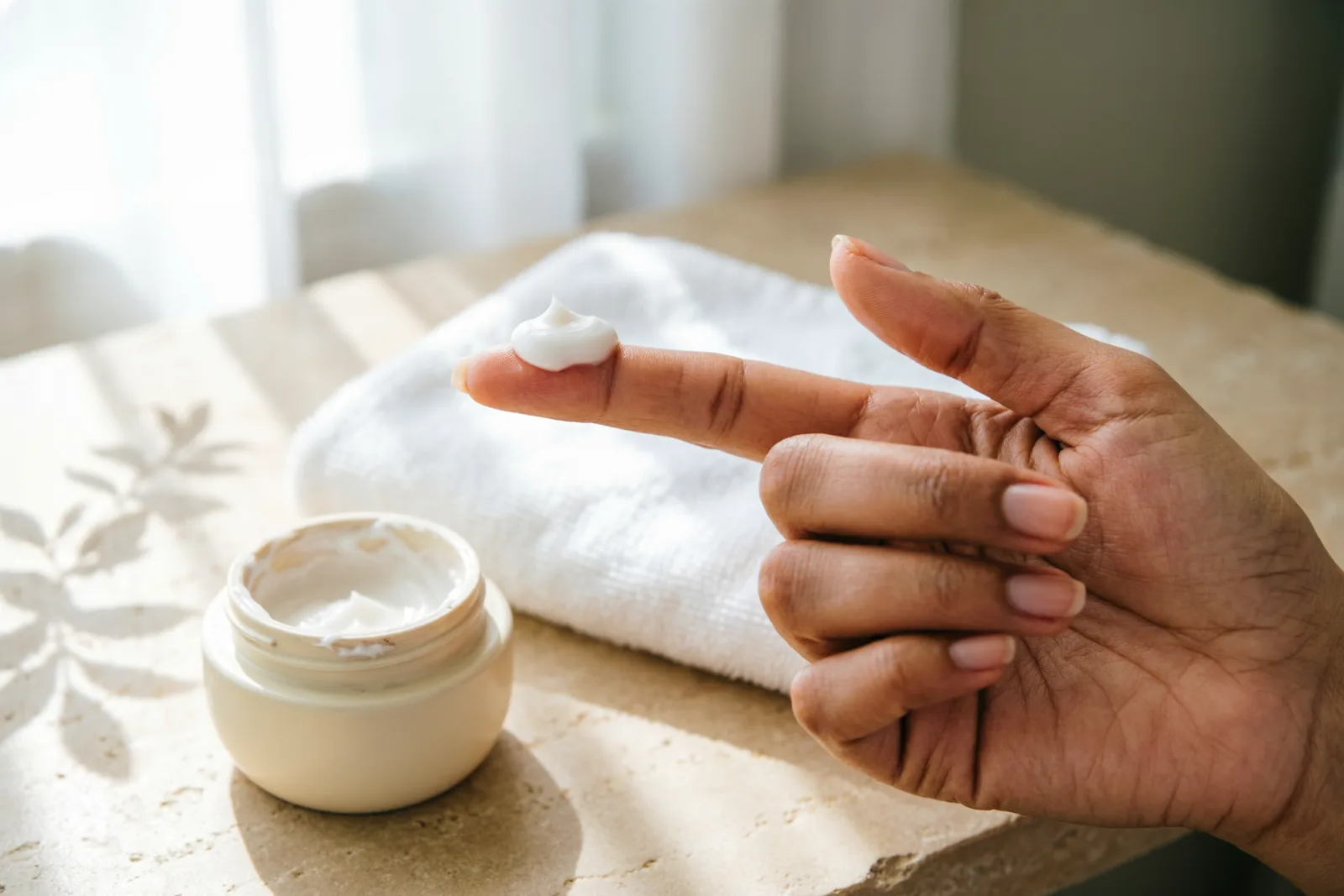
Lightly tap your two ring fingertips together to split the product evenly. Your ring finger naturally possesses the weakest musculature of your hand, providing a built-in safety mechanism against excessive pressure.
Step 3: Dot Along the Lower Orbital Rim
Map out four to five micro-dots starting half an inch beneath the inner corner, following the lower orbital crescent outwards towards the cheekbone and temple.
Step 4: Pat Gently with Zero Friction
Gently pat and press the product into the skin using soft, rhythmic tapping motions until the cream absorbs into a translucent sheen.
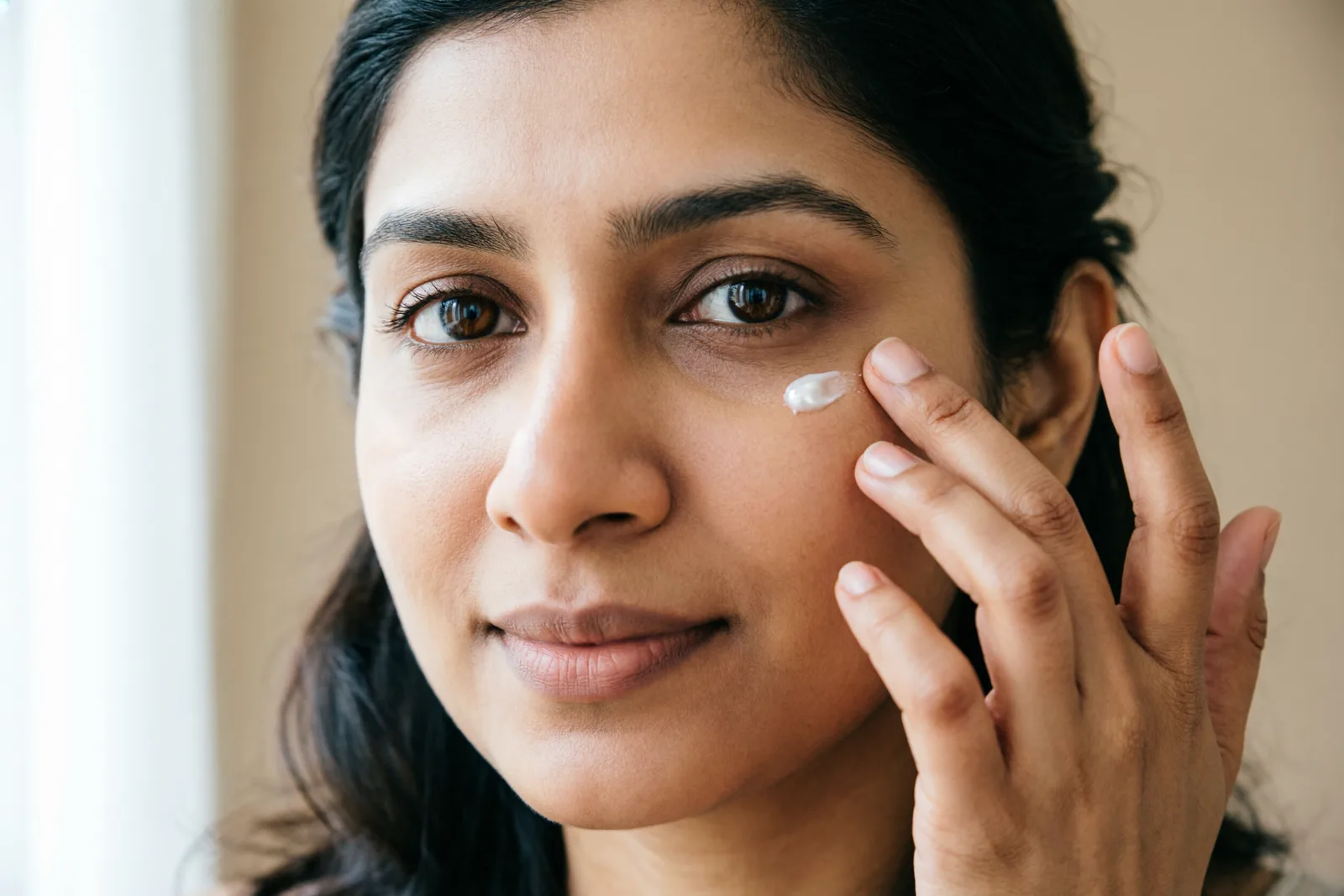
Never pull, stretch, or smear the cream back and forth across the delicate skin. Dragging stretches fragile elastic fibres, contributing over time to premature sagging.
Step 5: Allow 60 Seconds to Settle
Allow the formula one full minute to settle into the stratum corneum before layering your facial moisturiser, daytime SPF, or under-eye concealer.
When to Apply: Morning, Night, or Both?
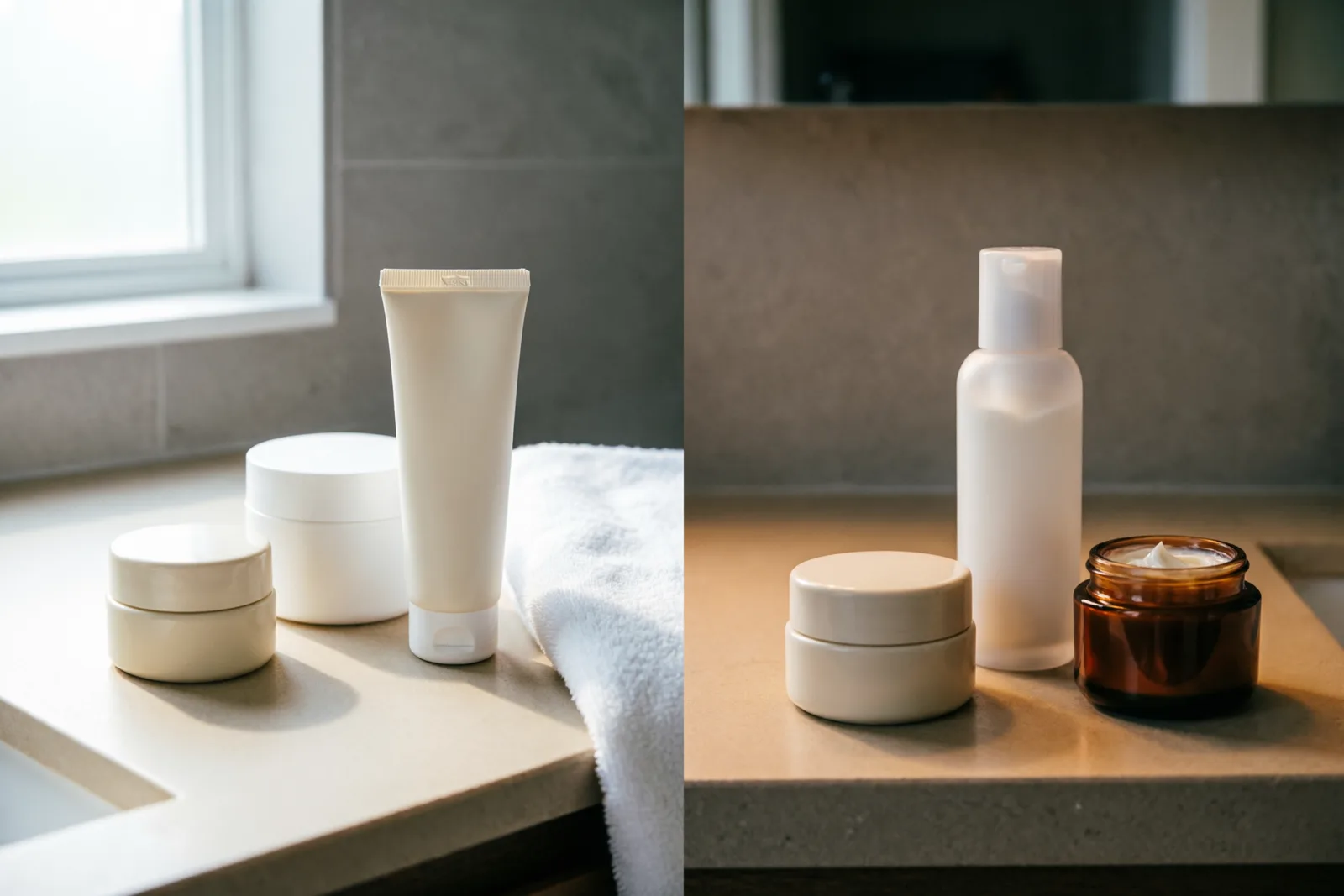
Morning Routine: Depuff and Protect
- Ideal Actives: Caffeine, hyaluronic acid, green tea polyphenols, and peptides.
- Goal: Caffeine constricts dilated periorbital blood vessels to reduce morning fluid puffiness, while hyaluronic acid plumps fine dehydration lines.
- Finish: Always follow with broad-spectrum sunscreen and UV-blocking sunglasses.
Evening Routine: Repair and Replenish
- Ideal Actives: Ceramides, squalane, fatty acids, and micro-encapsulated retinal/retinol.
- Goal: Deeply replenishes moisture while skin undergoes nocturnal cellular regeneration.
- Caution: If using an active retinol eye cream, introduce it only 2 nights per week to prevent peeling and eyelid dermatitis.
Choosing Actives and Preventing Periorbital Irritation
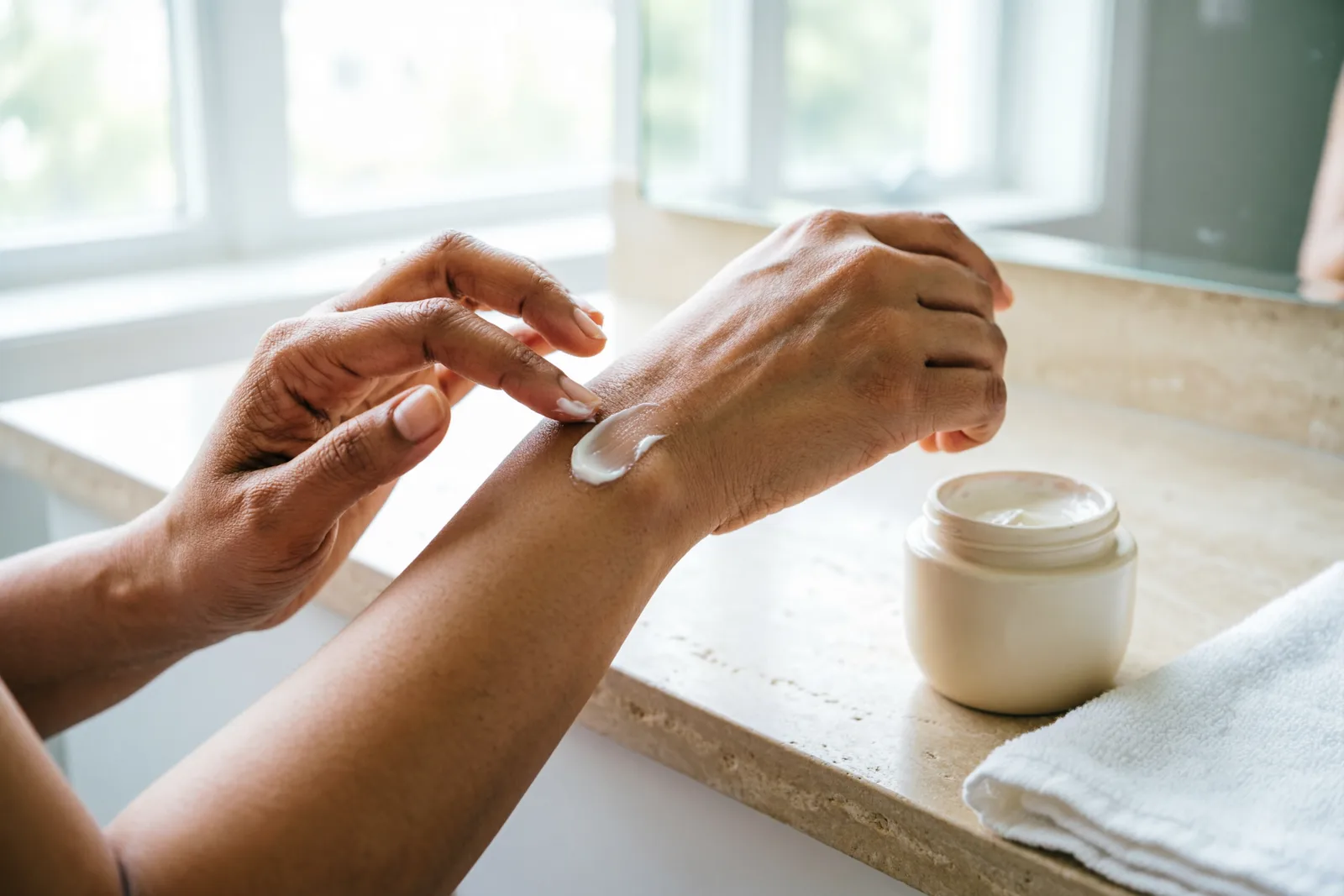
- Dryness & Dehydration: Look for ceramides, squalane, and multi-molecular hyaluronic acid.
- Vascular Dark Circles: Look for caffeine, vitamin K, and niacinamide.
- Fine Lines & Crow's Feet: Look for copper peptides, bakuchiol, or low-dose retinaldehyde.
- Avoid Heavy Fragrances: Synthetic perfumes and essential oils are the primary culprits behind allergic contact blepharitis (eyelid eczema). Choose 100% fragrance-free formulas.
Conclusion
Knowing how to apply under-eye cream correctly transforms a potentially irritating habit into a high-impact, protective daily ritual. By honoring the anatomical boundary of your orbital bone, using the gentle ring finger, and limiting your dose to a single grain of rice, you provide your periorbital skin with the targeted care it deserves.
Stay consistent, be patient with your skin's natural regeneration cycles, and remember that gentle technique matters far more than an expensive product price tag.
Frequently Asked Questions
Can I use my regular facial moisturiser instead of an eye cream?
If your facial moisturiser is fragrance-free, gentle, and lightweight, you can certainly tap a tiny amount around your orbital bone. However, rich facial creams containing heavy comedogenic waxes, high active acid percentages, or strong fragrances can trigger periorbital milia and eye stinging.
At what age should I start using an eye cream?
There is no arbitrary chronological age requirement. You can introduce a basic hydrating eye gel or cream in your early-to-mid twenties if you notice fine dehydration lines, wear heavy eye makeup, or experience chronic dryness. Prevention through daily sun protection and hydration is always easiest.
What should I do if eye cream accidentally gets into my eye?
Do not rub your eye. Immediately flush the ocular surface with clean, lukewarm tap water or sterile saline solution for 2 to 3 minutes. If burning, foreign body sensation, or redness persists after an hour, consult an optometrist or ophthalmologist.
Can eye cream completely eliminate hereditary dark circles?
No. Dark circles have multiple anatomical causes: structural bone hollows (tear troughs), genetic hyperpigmentation, or ultra-thin skin revealing purple vascular networks beneath. While caffeine and brightening peptides can improve surface radiance and fluid puffiness, they cannot alter underlying facial bone architecture or genetics.
Can I apply under-eye cream if I wear contact lenses?
Yes. Apply your eye cream after inserting your contact lenses in the morning (ensuring clean, dry hands), and remove your lenses before your nighttime cleansing and eye cream application. Always keep the cream along the outer orbital bone so it does not migrate onto your contact lens surface.
Related Articles
Explore more insights and stories from this category.

Benefits of Vitamin C for Skin: What Really Works?
Explore the benefits of vitamin C for skin, from antioxidants to uneven tone. Learn about vitamin C serum benefits, safe application and common mistakes.

How to Wash Hair Properly: A Step-by-Step Guide
Learn how to wash hair with 7 simple steps, from shampooing to gentle drying. See how to wash your hair, choose wash frequency and avoid common mistakes.