How to Build a Raised Garden Bed: A Step-by-Step DIY Guide
Learn how to build a raised garden bed with simple DIY steps. Explore material choices, soil preparation and practical tips for a sturdy garden space.
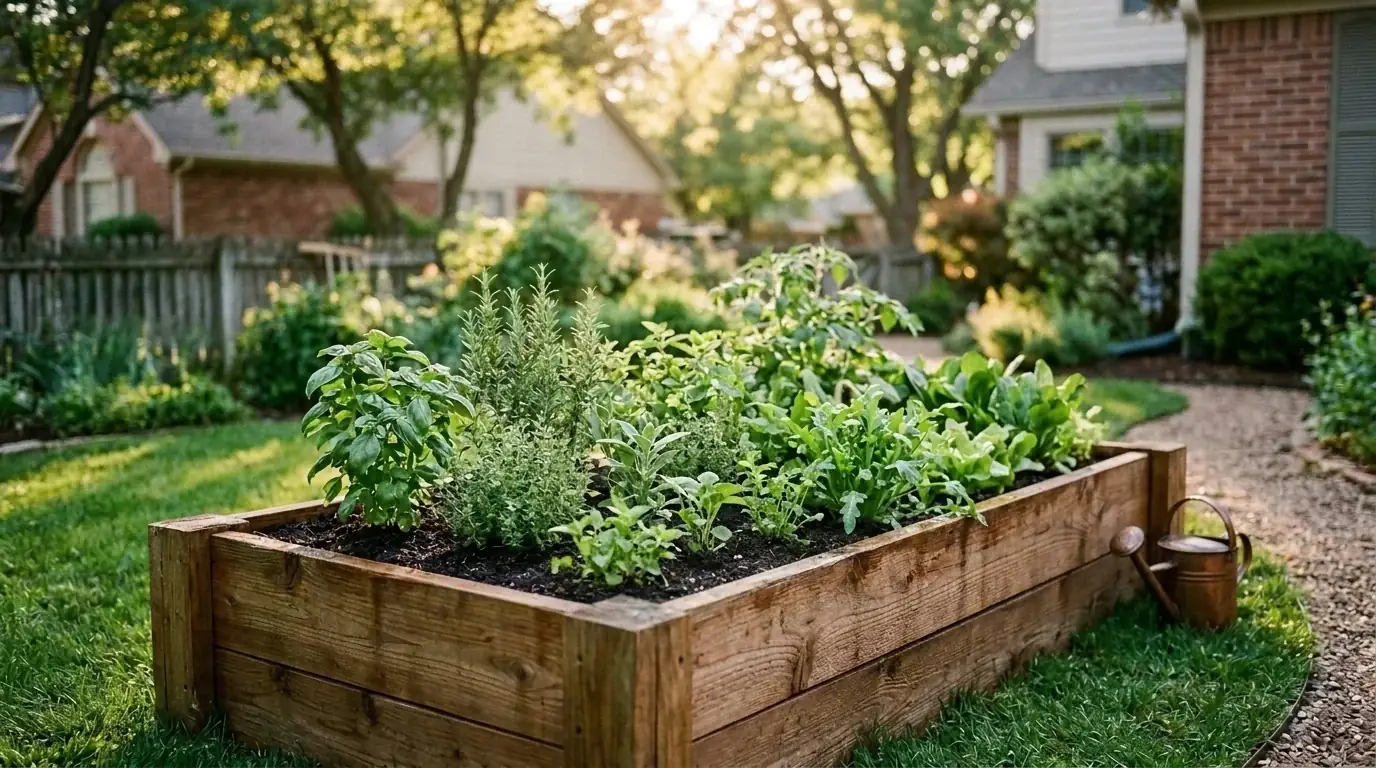
A raised garden bed is one of the most effective ways to grow fresh organic vegetables, culinary herbs, and vibrant cut flowers—especially if your backyard suffers from compacted clay soil, poor drainage, or intrusive tree roots.
By elevating your growing medium above ground level, you gain total control over soil composition, warm up root zones earlier in spring, and reduce back strain during weeding and harvesting. The best part is that constructing a sturdy raised planter requires only fundamental carpentry skills and a single afternoon of work. This DIY guide walks you through selecting rot-resistant timber, framing the bed, prepping the sub-base, and formulating the ultimate nutrient-dense soil mix.
The Ergonomic Sizing Rule
Never build a raised bed wider than 1.2 metres (4 feet) if accessible from both sides, or 60–90 cm if built against a fence or wall. This ensures you can comfortably reach the center without ever stepping on the soil and compacting delicate root zones.
Planning Your Raised Garden Bed and Gathering Supplies
Location and orientation are paramount. Most fruiting vegetables (like tomatoes, peppers, and cucumbers) require a minimum of six to eight hours of direct daily sunlight.
Sizing and Timber Selection
When selecting lumber for food crops, avoid older pressure-treated timber that was preserved with chromated copper arsenate (CCA). Instead, choose naturally rot-resistant hardwoods or untreated softwoods:
- Cedar or Redwood: Naturally saturated with aromatic oils that resist decay and insects for 10–15 years without chemical sealants.
- Untreated Douglas Fir / Pine: Budget-friendly and easy to work with, typically lasting 4–7 years before needing board replacement.
- Hardwood Sleepers (Oak / Larch): Substantial and long-lasting, ideal for deep architectural planting beds.
Tool and Hardware Checklist
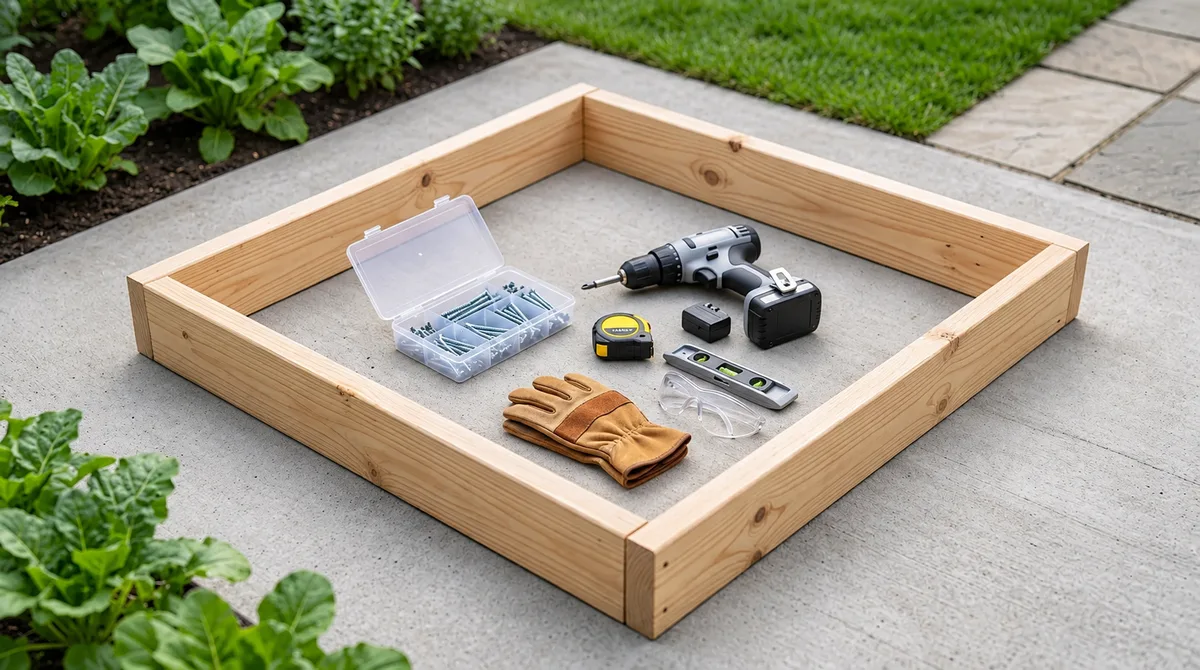
- Four 5x15 cm (2x6 inch) or 5x20 cm (2x8 inch) boards cut to length (e.g., two 2.4 m sides and two 1.2 m ends).
- Four 5x5 cm (2x2 inch) internal corner bracing posts cut to bed height.
- 75 mm (3-inch) exterior-grade polymer-coated decking screws or stainless steel timber screws.
- Cordless drill/driver with pilot hole countersink bit.
- Measuring tape, carpenter's framing square, and 60 cm spirit level.
- Garden spade, landscaping fabric or cardboard sheet, and hardware mesh (gopher wire).
Raised Bed Materials Comparison
| Material | Estimated Lifespan | Toxicity Concerns | Relative Cost | Best For |
|---|---|---|---|---|
| Western Red Cedar | 12–18 Years | Zero (100% natural rot resistance) | High | Organic vegetable growing, long-term installations |
| Untreated Pine / Fir | 4–6 Years | Zero | Low | First-time gardeners, budget DIY builds |
| Corrugated Galvanized Metal | 20+ Years | Food-safe zinc coating | Medium-High | Modern industrial garden aesthetics |
| Composite Timber | 25+ Years | Plastic-wood blend (inert) | High | Zero-maintenance raised planters |
How to Build a Raised Garden Bed Step by Step
Follow this straightforward construction method to ensure square corners and a level foundation.
Step 1: Prep the Ground and Mark Boundaries
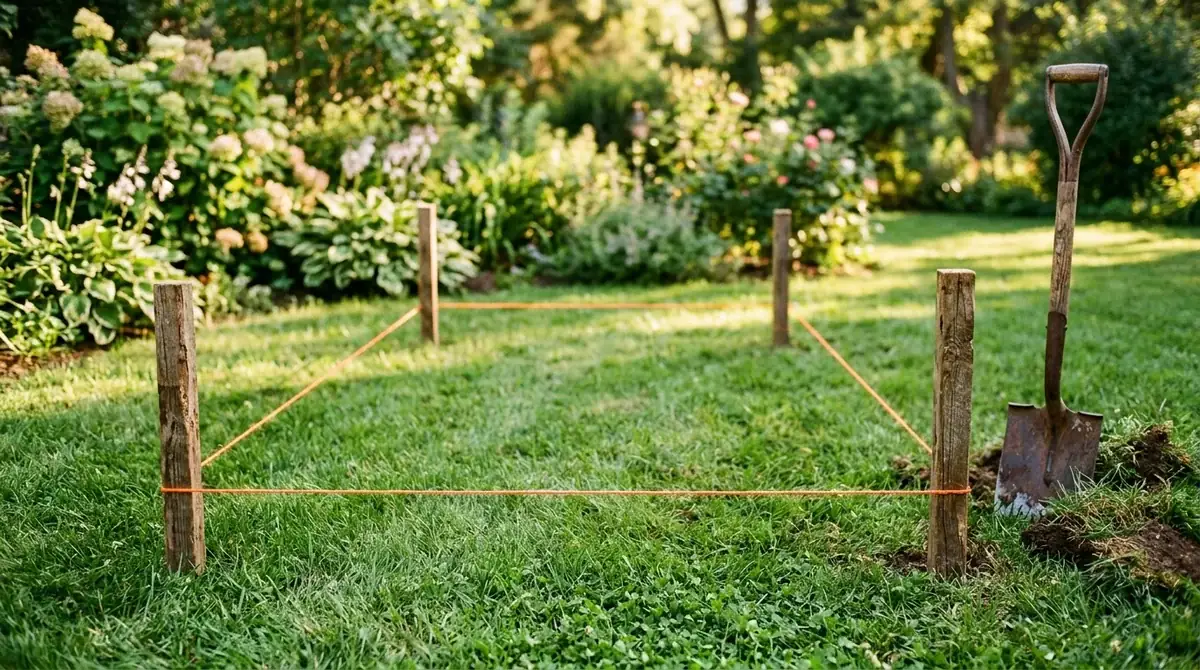
Drive four corner stakes into your lawn to demarcate the perimeter. If building over turf, you do not necessarily need to dig up all the grass. Instead, mow the area down to soil level, then lay down overlapping sheets of plain corrugated cardboard over the grass. The cardboard smothers weeds and lawn grass while decomposing into rich organic matter over time.
Step 2: Assemble the Timber Frame
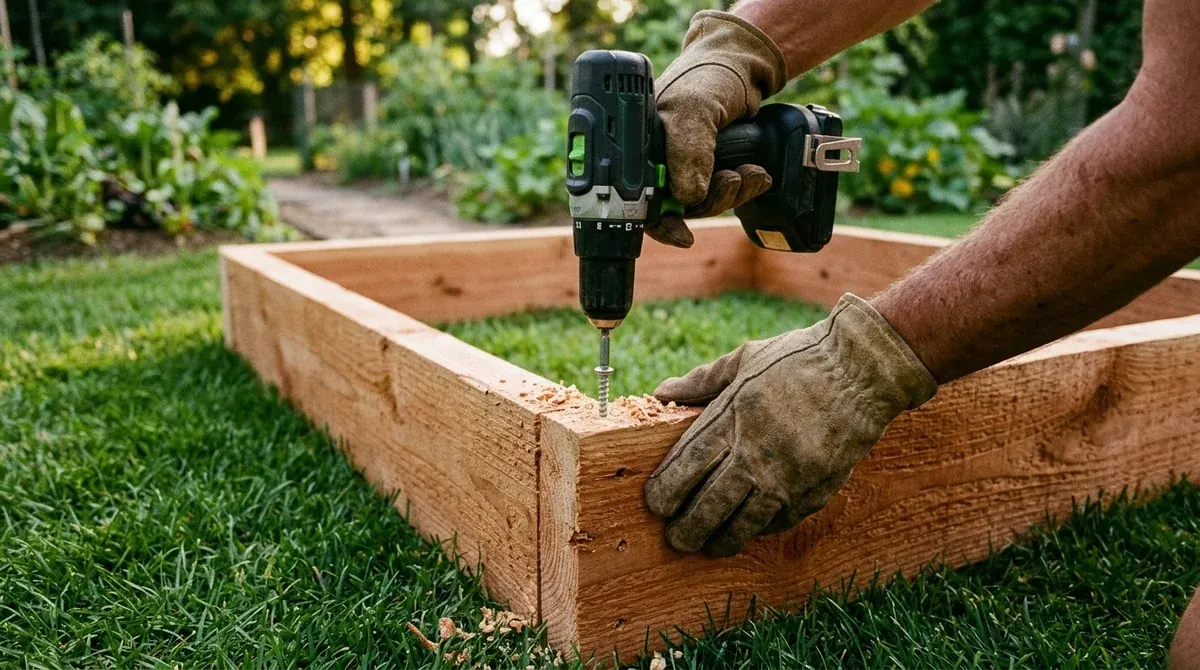
On a flat, level driveway or patio, stand your boards on edge to form a clean rectangle. Clamp the corner posts to the inside edges of the end boards. Pre-drill three pilot holes through each outside face into the internal corner brace to prevent timber splitting. Drive your exterior decking screws firmly into the wood.
Check the diagonal measurements from opposite corner to opposite corner with a tape measure—when both diagonals match down to the millimeter, your box is perfectly square.
Step 3: Level the Frame in Place
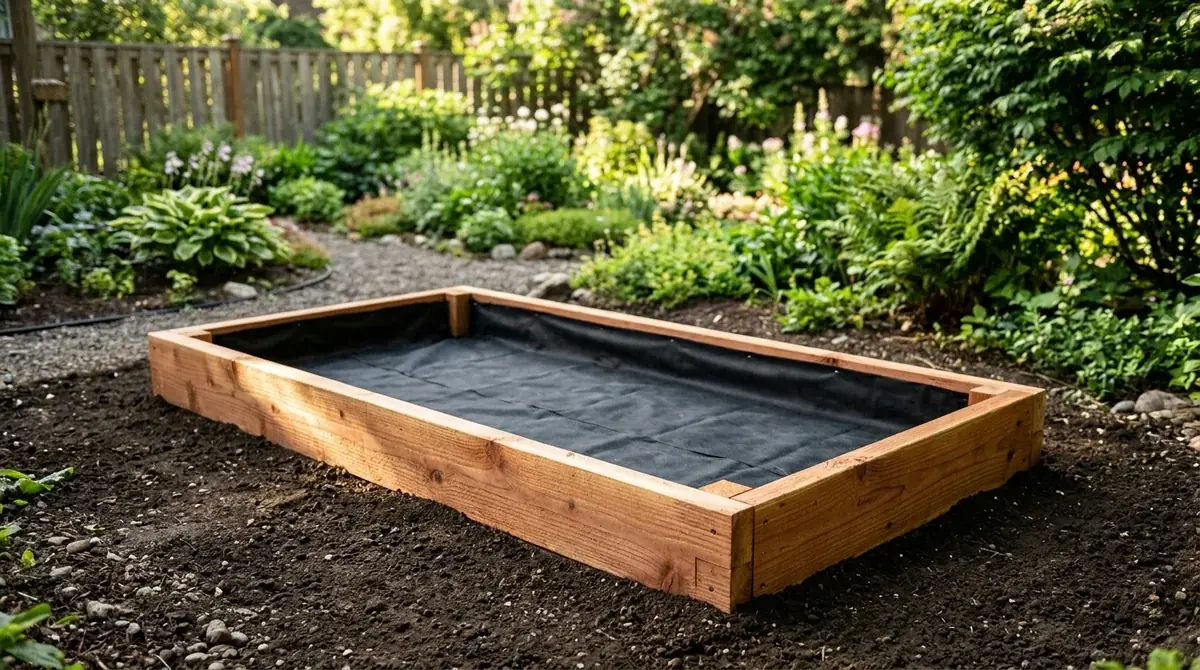
Move the assembled frame over your prepared cardboard base. Place your spirit level across the boards in both directions. If one side sits high, scoop out a shallow trench under that board until the entire perimeter sits dead level. A level frame prevents irrigation water and nutrients from pooling at one end.
Pest Barrier Recommendation
If moles, voles, or burrowing rodents are active in your region, staple 12 mm (1/2-inch) galvanized hardware cloth to the underside of the wooden box before placing it on the ground.
How to Fill Your Raised Garden Bed
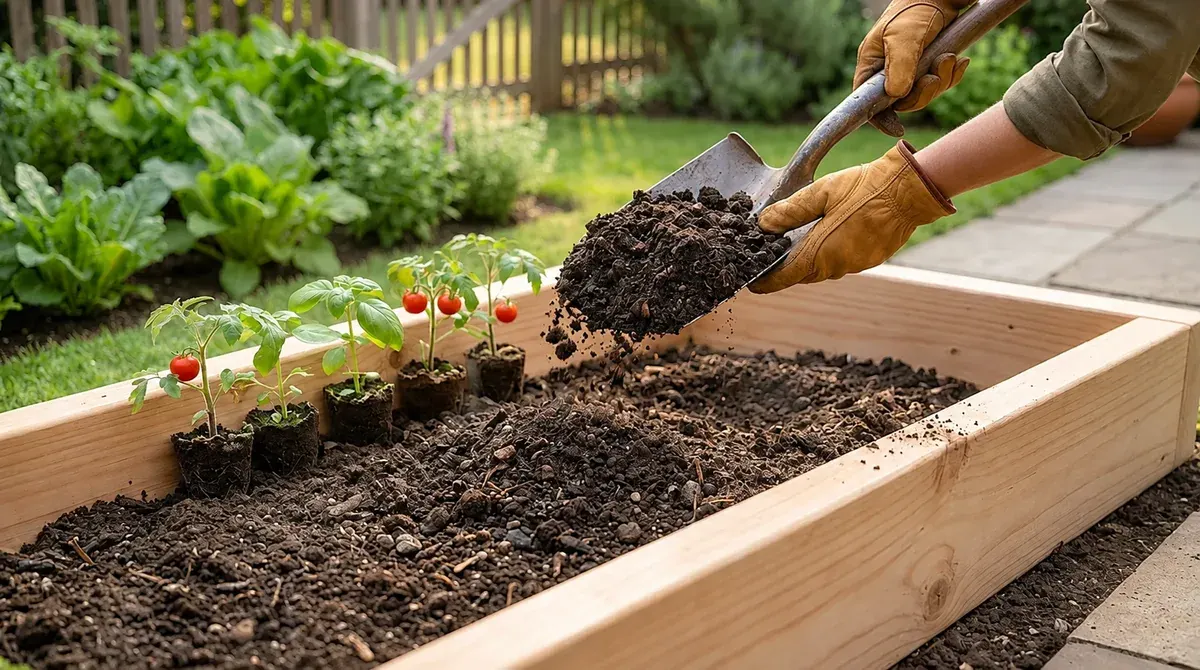
Avoid filling a raised bed entirely with ordinary garden soil from your lawn (which compacts and drains poorly) or pure bagged potting soil (which dries out rapidly). Instead, use the time-tested "Mel's Mix" or layered hügelkultur approach:
The Ideal Raised Bed Soil Formula
- 50% Quality Topsoil: Provides mineral body, trace elements, and moisture retention.
- 30% Well-Rotted Organic Compost: Delivers essential macronutrients and beneficial microbial life.
- 20% Aeration Amendment (Coarse Vermiculite or Perlite): Keeps the blend lightweight, loose, and aerated for deep root penetration.
Fill the frame to within 5 cm (2 inches) of the top rim. Water the bed deeply with a fine-spray garden hose to settle air pockets, then top off with an additional layer of finished compost.
Planting and Seasonal Maintenance
- Mulch the Surface: Spread a 5 cm layer of shredded straw, arborist wood chips, or shredded leaves over the exposed soil to cut evaporation by 60% and keep root zones cool during summer heatwaves.
- Monitor Irrigation Closely: Raised beds drain faster than in-ground garden beds. During midsummer heat, check moisture levels daily by poking a finger 5 cm into the soil.
- Replenish Annually: Soil naturally settles by 5–10 cm each year as organic matter decomposes. Top-dress with 5 cm of fresh compost each spring before planting.
Frequently Asked Questions
Does a raised garden bed need a solid bottom?
No. When placed on soil or grass, an open bottom is ideal because it allows plant taproots to seek deep nutrients and permits excess stormwater to drain freely into the subsoil. If placing a planter on a concrete patio or wooden deck, add a slotted wooden base with landscaping fabric to prevent soil loss while maintaining drainage.
How deep should a raised garden bed be?
A depth of 20 to 30 cm (8–12 inches) is sufficient for shallow-rooted crops such as lettuce, radishes, spinach, strawberries, and herbs. For deep-rooting plants like carrots, potatoes, and heirloom tomatoes, aim for a depth of 35 to 45 cm (14–18 inches).
How do I calculate how much soil to buy?
Multiply the internal length (meters) by width (meters) by soil depth (meters) to find the volume in cubic meters. For example, a 2.4 m long by 1.2 m wide by 0.3 m deep bed requires: 2.4 × 1.2 × 0.3 = 0.864 m³ (approx. 865 liters of soil blend).
Can I paint or stain my wooden raised garden bed?
Yes, but ensure you use non-toxic, eco-friendly exterior finishes labeled safe for food crops (such as pure raw linseed oil, tung oil, or zero-VOC milk paints). Apply coatings only to the exterior faces, leaving the interior faces bare to avoid chemical leaching into the root zone.
How many years will an untreated pine raised bed last?
Untreated softwoods like pine or spruce typically last 4 to 6 years before significant rotting occurs. You can extend their lifespan by lining the inside walls with breathable polyethylene plastic (leaving the bottom wide open for drainage) to minimize direct damp soil contact with the wood.
Related Articles
Explore more insights and stories from this category.
How to Wash Pillows Safely Without Damaging Them
Learn how to wash pillows without damaging their filling or shape. Discover how to clean pillows by material, choose the right method and dry them well.
How to Declutter Your Home: A Simple Step-by-Step Guide
Learn how to declutter your home with a simple room-by-room plan. Use practical sorting tips to clear space and keep your home neat and organised.