How to Wash Hair Properly: A Step-by-Step Guide
Learn how to wash hair with 7 simple steps, from shampooing to gentle drying. See how to wash your hair, choose wash frequency and avoid common mistakes.
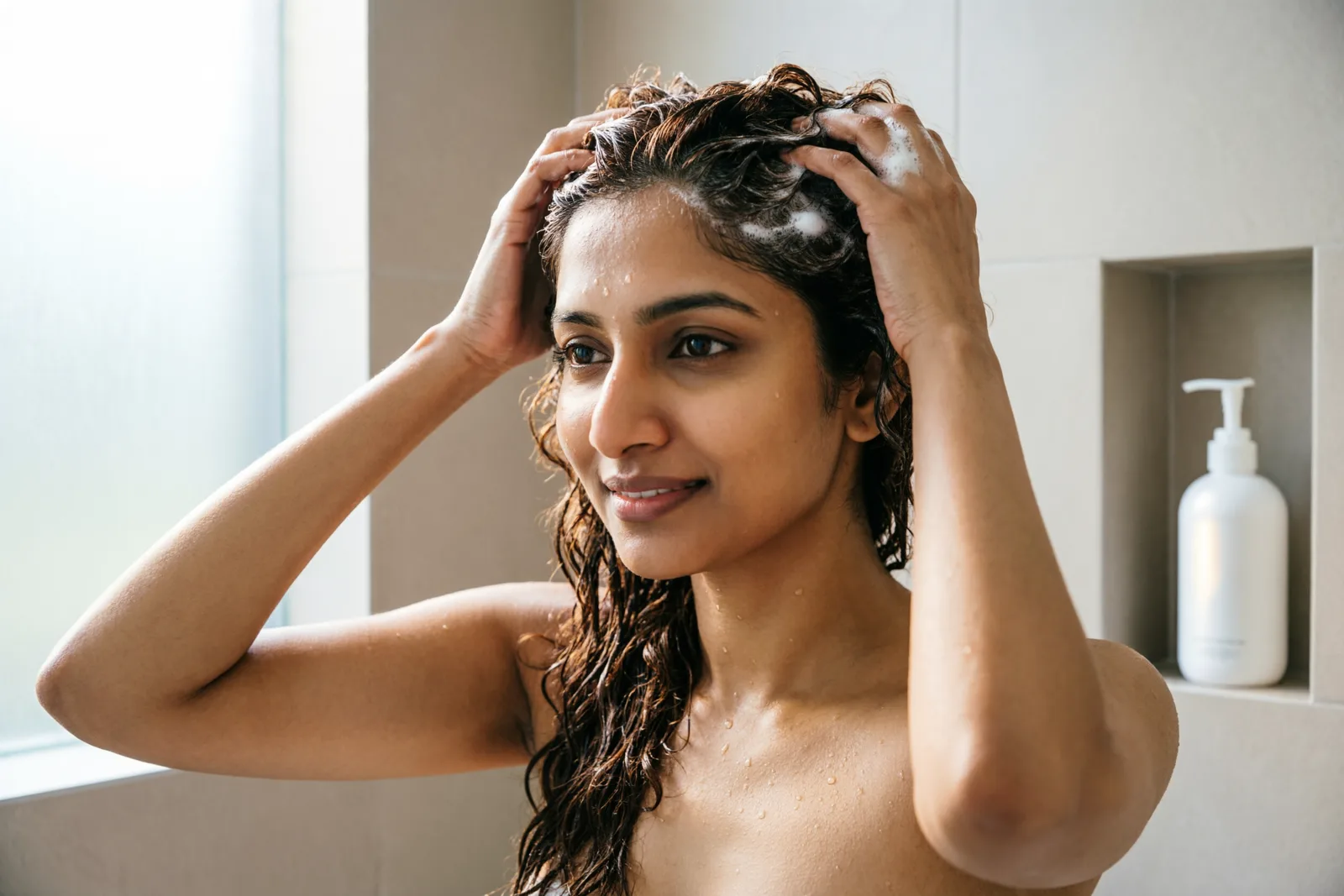
Your hair can feel coated and greasy just twenty-four hours after washing, yet the mid-lengths and ends remain brittle, frizzy, and impossibly tangled. Often, the underlying problem is not that you need a dozen new styling serums. It comes down to how and where you apply shampoo, how thoroughly you rinse, and how roughly you treat your hair while it is wet.
Proper hair washing requires treating your scalp and your hair lengths as two completely separate anatomical zones. Your scalp is living skin dense with sebaceous glands that requires targeted cleansing; your lengths are older, non-living keratin fibres that require gentle handling, hydration, and lipid conditioning.
This comprehensive guide breaks down the correct seven-step hair wash routine, detangling techniques, drying safeguards, and how to calibrate your washing frequency based on scalp sebum, hair texture, and lifestyle.
The Trichologist's Rule on Cleansing Zones
Shampoo is formulated for the scalp; conditioner is formulated for the hair lengths. Never gather all your hair on top of your head to scrub it into a soapy pile—doing so creates severe cuticle friction, knotting, and mechanical breakage. Let running water carry lather through the ends naturally.
What to Do Before Stepping into the Shower
Effective hair washing begins several minutes before turning on the water:

1. Detangle While Completely Dry
Wet hair swells with water, stretching by up to 30% and temporarily weakening its internal hydrogen and keratin bonds. Detangling knotty, wet hair leads to excessive snapped strands.
- For straight or loosely wavy hair, use a wide-tooth comb or flexible detangling brush to gently work out knots starting from the tips and working upward.
- For tightly coiled or curly hair (types 3 and 4), detangling with conditioner during the wash provides far better slip.
2. Assess Your Scalp State
Notice how your scalp feels:
- If you have heavy build-up from dry shampoo or styling pomades, prepare to dedicate extra rinsing time.
- If you have an active pre-wash hair oil treatment, plan for a thorough two-minute scalp massage to emulsify the lipids.
How to Wash Hair Properly: 7 Simple Steps
| Step | Action | Focus Area | Key Trichology Tip |
|---|---|---|---|
| 1. Saturate | Lukewarm water rinse | Roots to ends (1–2 mins) | Never wash with scalding hot water |
| 2. Shampoo | Finger pads scalp massage | Scalp & hairline only | Avoid using fingernails; don't scrub lengths |
| 3. Rinse | Running water flush | Entire hair mass | Part thick sections so water reaches the scalp |
| 4. Condition | Mid-lengths & ends | Ear-level down to tips | Keep conditioner 2–3 inches away from roots |
| 5. Detangle | Wide-tooth comb | Lengths with conditioner | Work from tips upward with zero tugging |
| 6. Final Rinse | Clean water flush | Scalp to ends | Rinse thoroughly until strands feel weightless |
| 7. Dry | Blot with microfiber/cotton | Full hair | Blot gently; never twist or rub aggressively |
1. Wet Your Scalp and Hair Completely
Spend at least 60 to 90 seconds saturating your hair with comfortable lukewarm water. Thick or low-porosity hair repels water initially; lift sections at the nape and crown to ensure the water reaches your scalp. Avoid steaming hot water, which strips protective epidermal lipids and sparks itchy, sensitized scalp flare-ups.
2. Apply Shampoo Specifically to Your Scalp
Dispense a quarter-sized amount of shampoo into your palm, add a splash of water, and lather between your hands first.
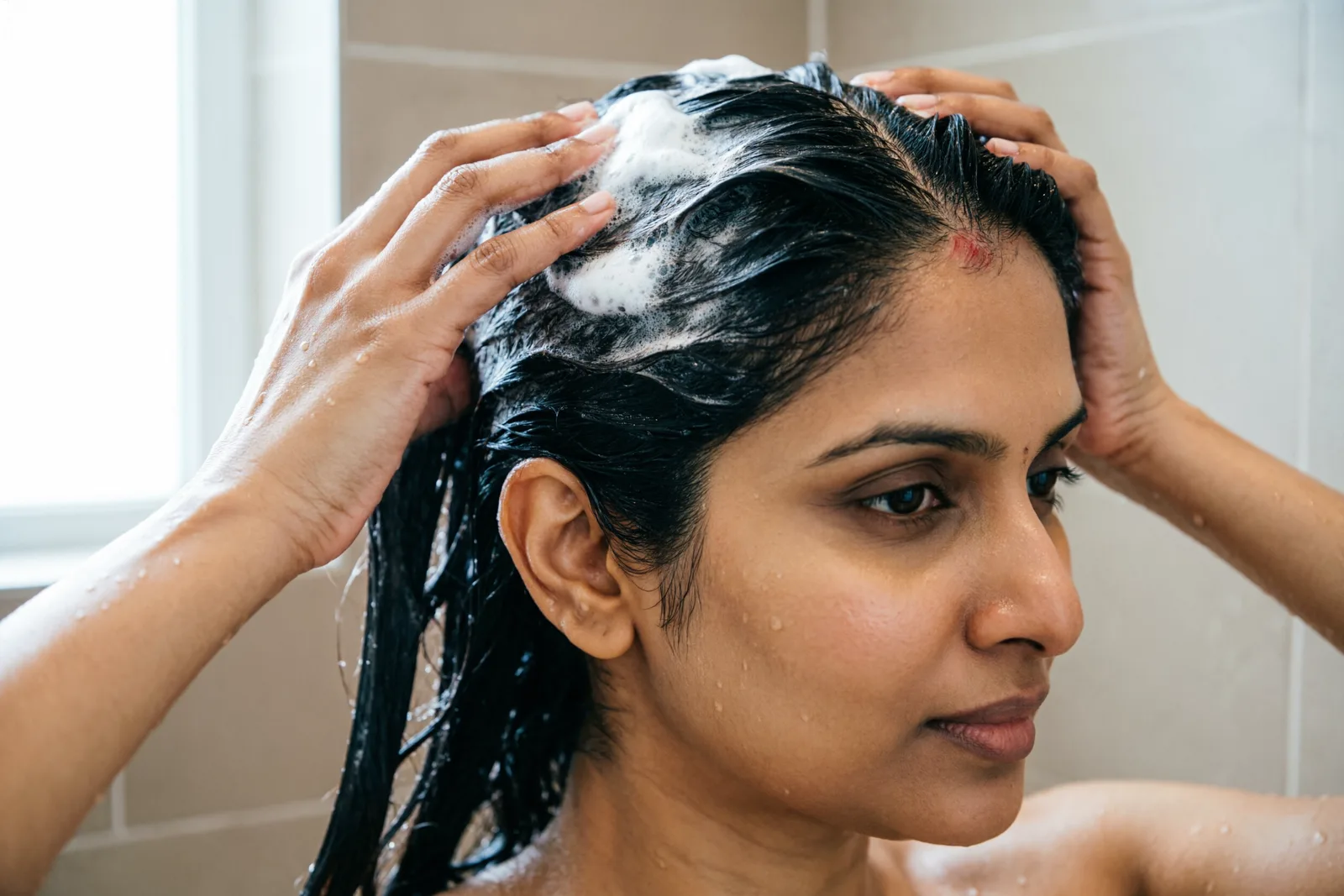
- Distribute the lather across key zones: hairline, crown, temples, and the nape of the neck.
- Use the flat pads of your fingers in small, circular motions. Never scrape with fingernails, which creates micro-abrasions that invite bacterial folliculitis.
- Do not pile your ends onto your scalp. The diluted soapy runoff during rinsing is more than adequate to clean the lengths without stripping them.
3. Rinse Until Every Trace of Lather Is Gone
Take your time rinsing. Trapped shampoo residue is one of the leading hidden causes of persistent scalp itchiness, flaking, and dull, lifeless strands.
4. Condition the Mid-Lengths and Ends
Gently squeeze out excess dripping water before applying conditioner. If hair is waterlogged, conditioner simply slips off without penetrating the cuticle:
- Smooth a moderate amount from ear-level down to the tips.
- Avoid applying conditioner directly to the scalp or roots, which weighs down fine hair and leads to premature oiliness.
- Leave on for 2 to 3 minutes to allow cationic surfactants and fatty alcohols to smooth the cuticle scales.
5. Detangle Carefully with Ample Slip
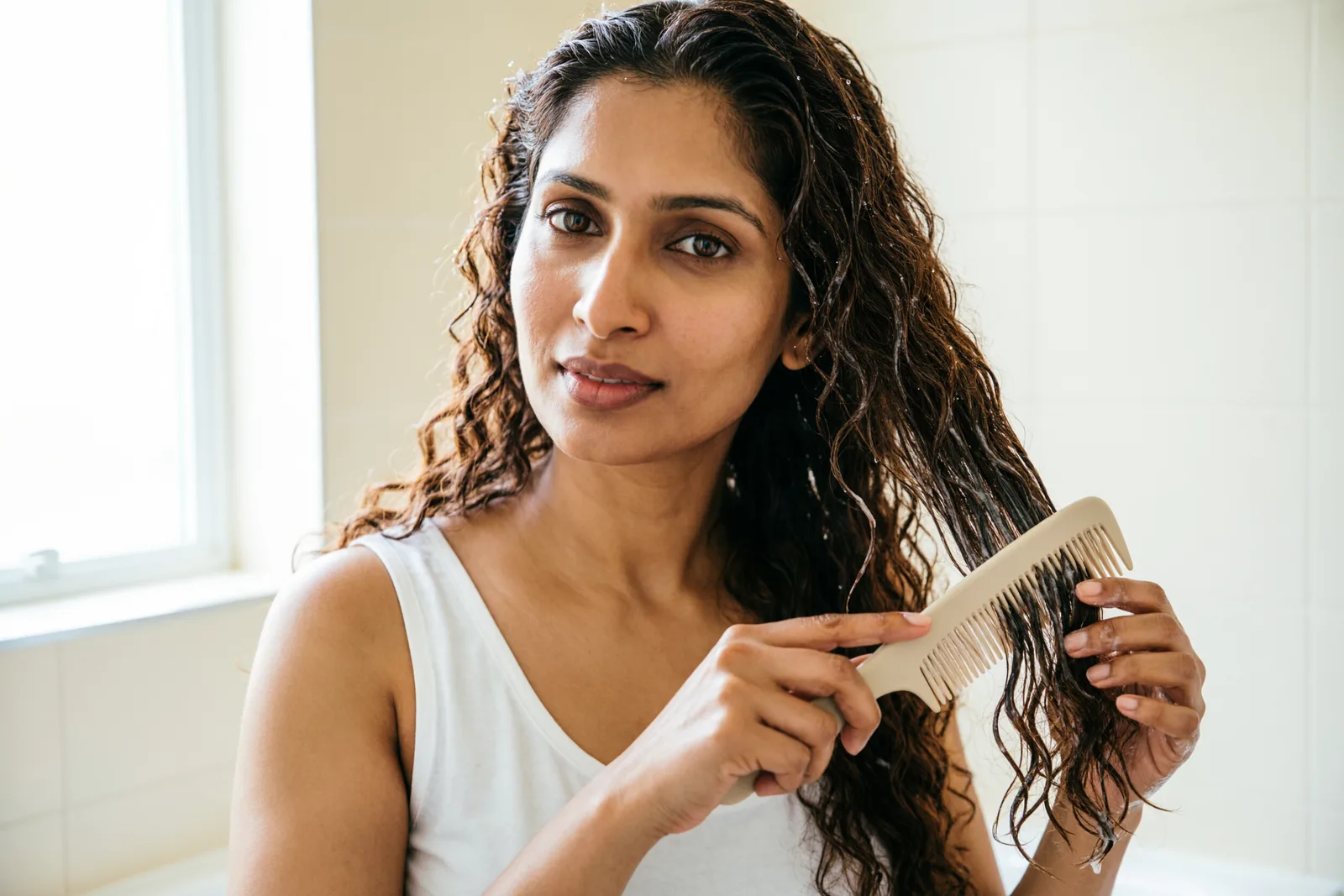
With conditioner providing slick lubrication, gently glide a wide-tooth comb through the lengths. Always start at the bottom two inches to remove end-snags, gradually working your way upward.
6. Thorough Final Rinse
Rinse until the water runs clear and the hair feels silky rather than slippery. While a freezing cold final rinse is often mythologized as a "cuticle-sealer," room-temperature or cool water is comfortable and sufficient.
7. Dry Gently Without Abrasive Towel Friction
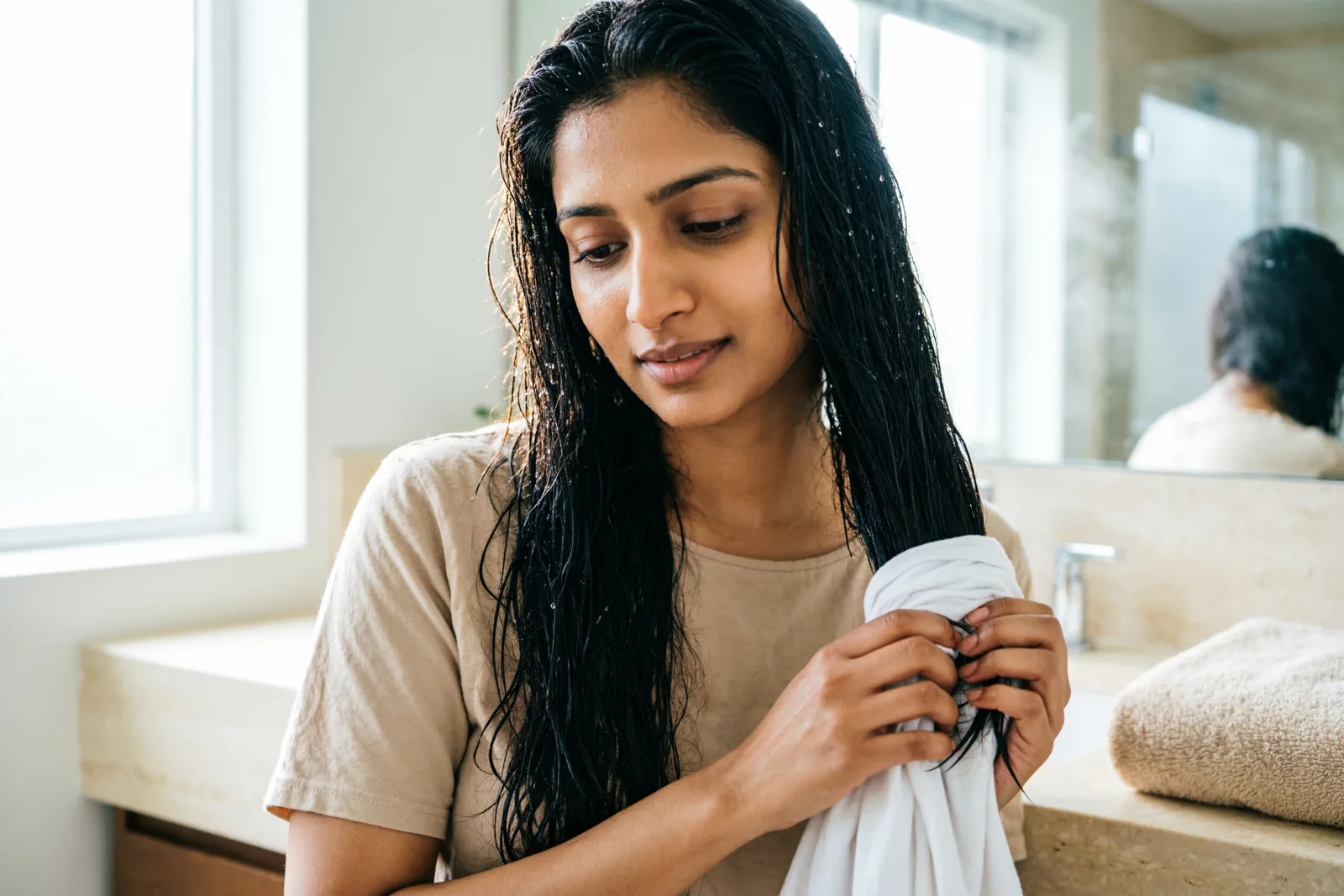
Standard terrycloth bath towels feature dense, coarse loops that snag fragile wet hair cuticles:
- Swap your rough towel for a smooth microfiber hair wrap or an old soft cotton T-shirt.
- Squeeze and blot moisture gently down the length. Never rub or twist vigorously.
- If blow-drying, use a low-to-medium heat setting and keep the nozzle pointing downward along the cuticle grain.
How Often Should You Wash Your Hair?
There is no universal calendar rule. How often you wash should depend entirely on your unique scalp sebum production, hair thickness, and daily physical activity:
- Oily Scalp / Fine Hair / Daily Gym Goers: Wash daily or every other day using a gentle, sulfate-free balancing shampoo. Leaving excess sebum on the scalp fuels Malassezia yeast and triggers dandruff.
- Normal Scalp / Wavy & Medium Hair: Wash 2 to 3 times per week.
- Dry Scalp / Coarse, Curly & Textured Hair: Wash once every 5 to 7 days, supplementing with co-washes or scalp mists between wash days.
Common Hair-Washing Mistakes to Stop Making
- Scrubbing hair ends together: Generates severe frictional wear, cuticle chipping, and split ends.
- Scratching with fingernails: Irritates nerve endings and causes localized scalp inflammation.
- Skipping conditioner on fine hair: Fine hair needs conditioning to prevent mechanical tangling; simply choose a featherlight volumizing formula and apply strictly to the tips.
- Sleeping on damp hair: Damp pillowcases create a humid incubator for fungal growth and stretch hair out of shape during sleep.
Conclusion
Mastering how to wash hair properly is the ultimate foundation of healthy hair care. By keeping shampoo focused on your scalp, nourishing your ends with conditioner, and eliminating rough towel friction, you will transform dull, unmanageable strands into vibrant, resilient hair.
Start by adjusting just one habit—such as switching to finger pads or blotting with a cotton T-shirt—and let consistent, gentle technique deliver lasting salon-worthy health.
Frequently Asked Questions
Does diluting shampoo in water make it safer or gentler?
Diluting a dime-sized amount of shampoo with water in your hand right before lathering can help distribute thick formulas more evenly across the scalp. However, never dilute an entire bottle of shampoo with tap water in advance, as adding unpreserved water breaks down the cosmetic preservative system and invites bacterial contamination.
Is a pre-shampoo scalp scrub necessary?
No. For most individuals, regular, thorough fingertip cleansing is completely sufficient. Physical scalp scrubs can be overly abrasive, especially if you have a sensitive scalp, psoriasis, or active dandruff.
Does washing hair with cold water close the cuticle for extra shine?
Hair cuticles are not living pores that open and close in response to temperature. While extremely hot water can strip protective lipids, lukewarm or cool water is ideal. Conditioning agents and leave-in silicones or plant oils are what truly smooth cuticle scales and impart shine.
Should I always shampoo twice in the shower?
Double-cleansing the scalp is only beneficial if you have heavy styling build-up, haven't washed your hair in several days, or applied a heavy oil mask. For daily or every-other-day washing, a single thorough cleanse is gentler and prevents barrier stripping.
Can washing hair too often cause hair loss?
Washing your hair does not cause telogen effluvium or genetic hair thinning. The hairs you see shed in the shower drain are hairs that naturally entered the telogen (shedding) phase weeks ago and were loosened by washing. In fact, neglecting scalp hygiene can lead to seborrhoeic dermatitis, which can aggravate hair fall.
Related Articles
Explore more insights and stories from this category.
How to Apply Under Eye Cream: Where, When and How Much
Learn how to apply under eye cream with the right amount, placement and timing. See how to use under eye cream gently and avoid common skincare mistakes.

Benefits of Vitamin C for Skin: What Really Works?
Explore the benefits of vitamin C for skin, from antioxidants to uneven tone. Learn about vitamin C serum benefits, safe application and common mistakes.