Home Made Body Scrub: 5 Easy Recipes for Softer Skin
Try a home made body scrub with five simple recipes using oats, coffee and besan. Learn how a homemade natural body scrub can exfoliate gently and safely.
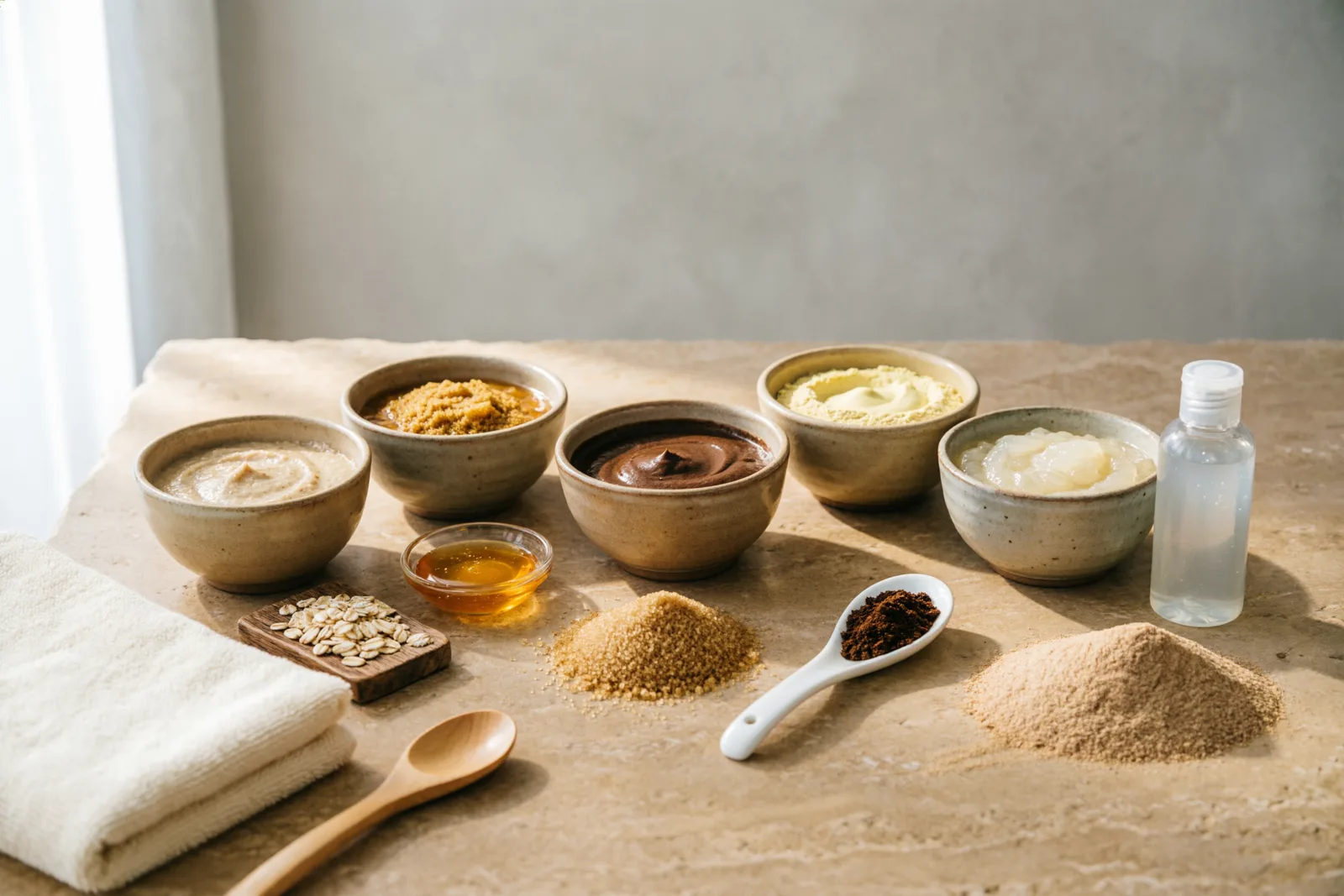
A well-formulated body scrub can leave your arms, shoulders, and legs feeling touchably soft, but the wrong concoction can leave skin red, micro-torn, and severely dehydrated. With an overwhelming number of kitchen DIY hacks circulating online, it is difficult to know which pantry staples are safe, how finely they should be ground, and how often body exfoliation is genuinely beneficial.
If you enjoy preparing home treatments, the golden rule is simplicity and low mechanical friction. A homemade body scrub can temporarily dislodge loose superficial flakes, but it cannot permanently alter your skin's genetic pigmentation or erase stretch marks.
This practical guide provides five dermatologist-conscious recipes, explains how physical exfoliation works on body skin, and highlights key safeguards to prevent barrier damage.
The Dermatologist's Rule on Mechanical Scrubs
The goal of physical exfoliation is gentle cellular sloughing, not abrasive sandpapering. Coarse sea salts, baking soda, and harsh nut shells create microscopic epidermal fissures that trigger post-inflammatory hyperpigmentation (PIH). Always prioritize ultra-fine particle size and featherlight pressure.
What Can a Homemade Body Scrub Actually Do?
Body scrubs work through light mechanical friction to loosen accumulated corneocytes (dead skin cells) on the surface of the stratum corneum:
- Smoother Texture: Smoothing dry patches on elbows, knees, and ankles helps moisturisers penetrate more effectively.
- Enhanced Moisture Absorption: Removing rough flaky buildup allows rich body lotions and body oils to glide evenly.
- Realistic Limits: Scrubbing cannot eliminate cellulite, permanently bleach sun tans, or substitute for chemical exfoliants like lactic or salicylic acid.
For chronically dry or reactive skin, manual scrubbing is often unnecessary—daily barrier repair with a ceramide-rich body cream yields better results with zero irritation risk.
5 Simple Homemade Body Scrub Recipes
Always mix your scrub in a sanitized bowl using clean utensils. The recipes below yield single-use batches. Because homemade mixtures contain water, yoghurt, or raw botanicals without antimicrobial preservatives, discard any leftovers immediately.
| Scrub Recipe | Exfoliating Base | Liquid Carrier | Best Body Area | Exfoliation Level |
|---|---|---|---|---|
| Oat & Honey | Milled colloidal oats | Honey & warm water | Arms, chest & sensitive skin | Ultra-Gentle |
| Brown Sugar & Sunflower | Fine soft brown sugar | Sunflower seed oil | Rough elbows, heels & knees | Moderate |
| Coffee & Yoghurt | Ultra-fine espresso grind | Unsweetened plain yoghurt | Legs & thighs (occasional) | Moderate |
| Besan & Oat Polish | Chickpea flour (besan) | Water or rose water | Torso & back (non-acneic) | Gentle |
| Rice Flour & Aloe | Silky rice starch flour | Fragrance-free aloe gel | Calves & forearms | Mild & Cooling |
1. Finely Milled Oats and Honey (Ultra-Gentle)
Colloidal oats contain natural avenanthramides and beta-glucan compounds known for soothing sensitized skin.
- Ingredients: 2 tablespoons of finely powdered plain rolled oats, 1 teaspoon of raw honey, and 1–2 tablespoons of clean lukewarm water.
- Method: Blend into a soft, velvety paste. Apply to damp arms or legs with light, sweeping motions for 30 seconds, then rinse with warm water. This recipe is the safest choice for individuals prone to dryness.
2. Brown Sugar and Sunflower Oil for Rough Patches
Brown sugar granules are softer and smaller than crystalline white sugar or rock salts, making them less harsh on thickened skin.
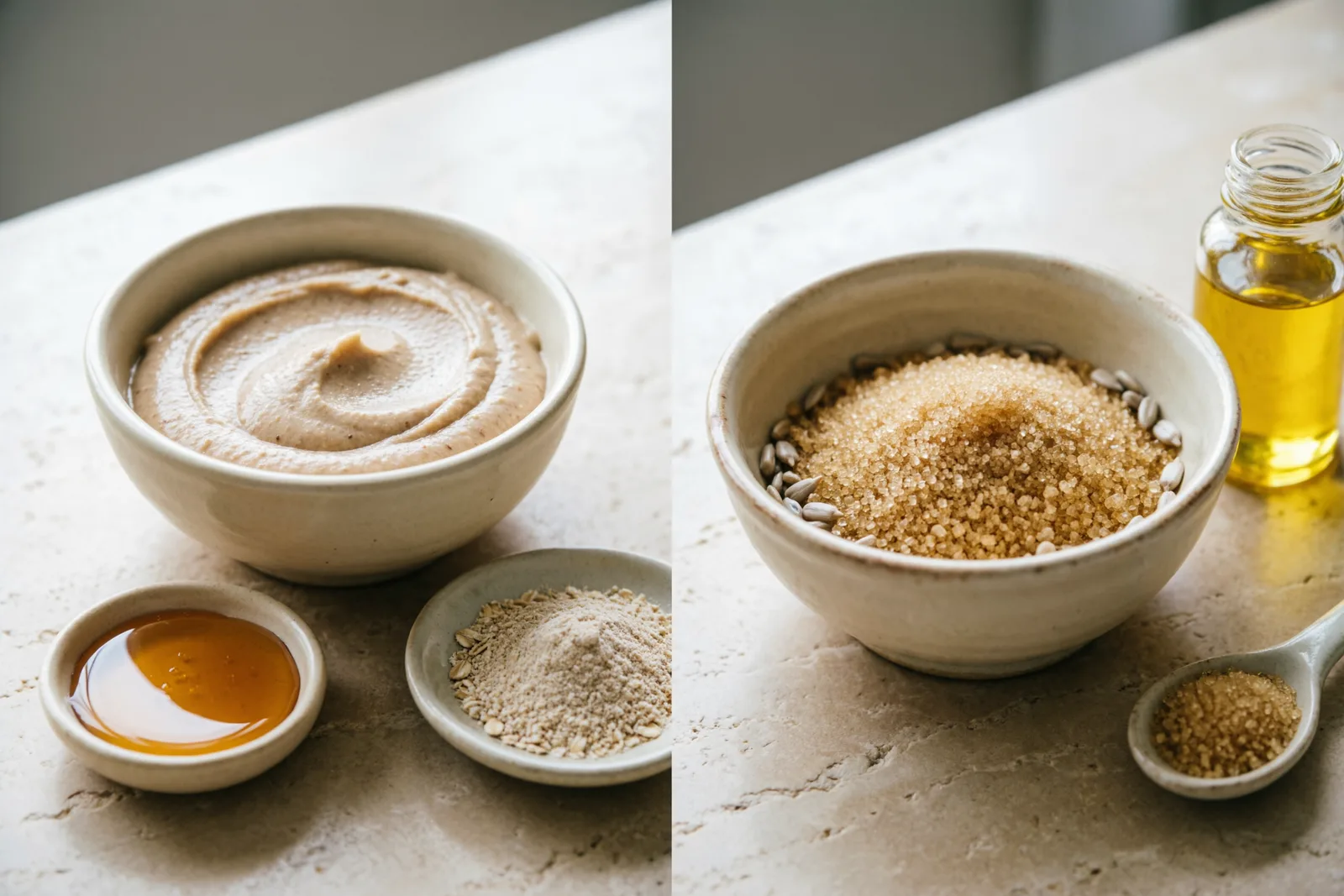
- Ingredients: 1 tablespoon of fine brown sugar and 1 tablespoon of cold-pressed sunflower or sweet almond oil.
- Method: Stir into a loose paste. Smooth across damp elbows and knees with zero downward pressure. Rinse thoroughly and wash away any oil residue to prevent slipping in the shower.
3. Coffee and Plain Yoghurt (Invigorating Polish)
Coffee grounds provide an aromatic morning shower experience, while plain yoghurt contributes mild natural lactic acid.
- Ingredients: 1 tablespoon of finely ground spent coffee and 2 tablespoons of plain, unsweetened yoghurt.
- Method: Combine thoroughly and gently apply to damp legs. Rinse immediately; do not let the paste dry like a clay mask. Coffee grounds can be jagged, so keep pressure minimal and avoid if you have delicate capillaries.
4. Besan and Oat Cleansing Polish
Taking inspiration from classical Indian ubtans, this water-based blend provides a traditional grain wash without heavy oil residues.
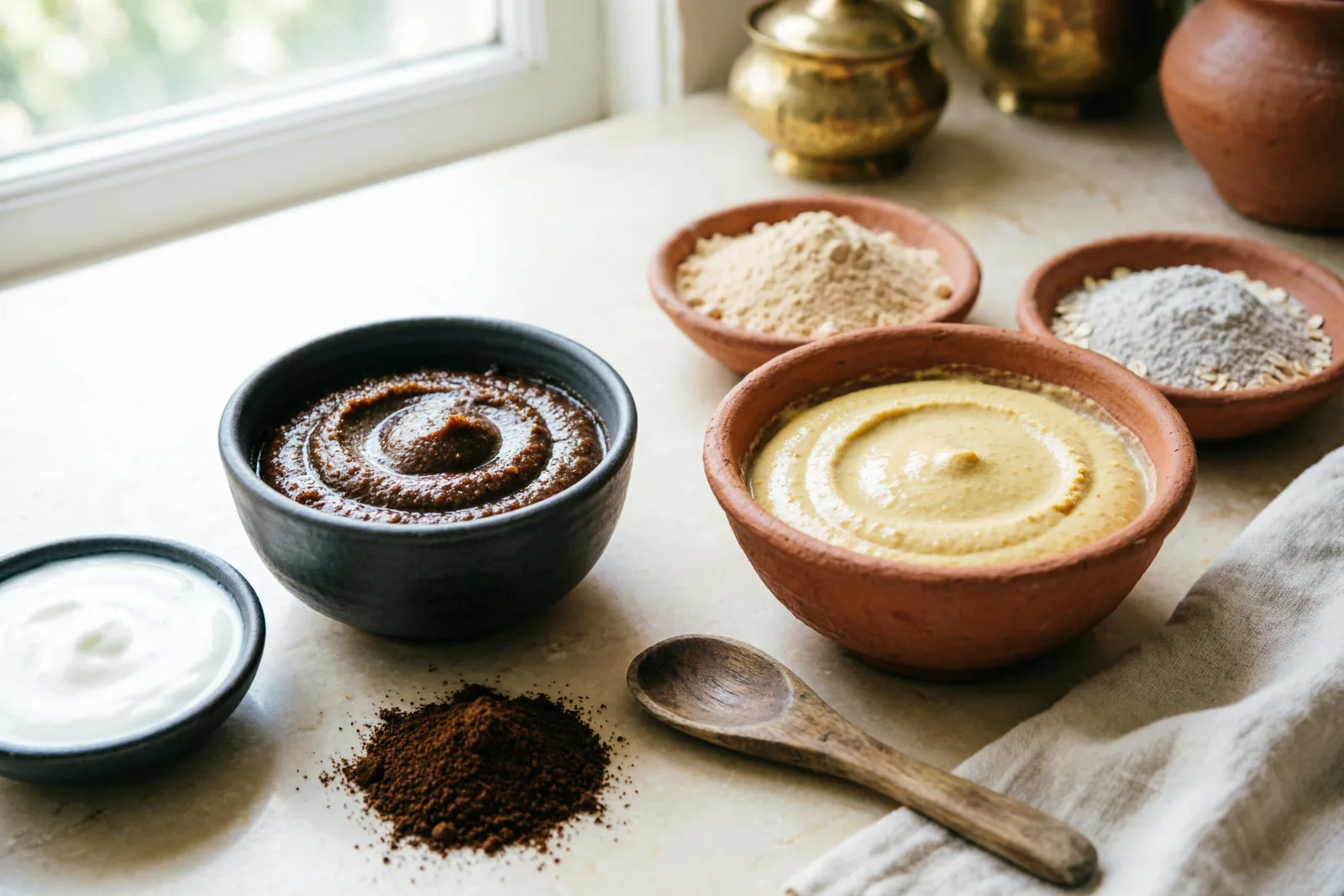
- Ingredients: 1 tablespoon of chickpea flour (besan), 1 tablespoon of finely milled oats, and enough water to create a spreadable cream.
- Method: Smooth across damp body skin and rinse away before the mixture dries. Ideal for normal-to-oily body skin in hot, humid weather.
5. Silky Rice Flour and Aloe Vera Gel
Finely milled rice flour offers mild starch friction, paired with the cooling slip of soothing aloe gel.
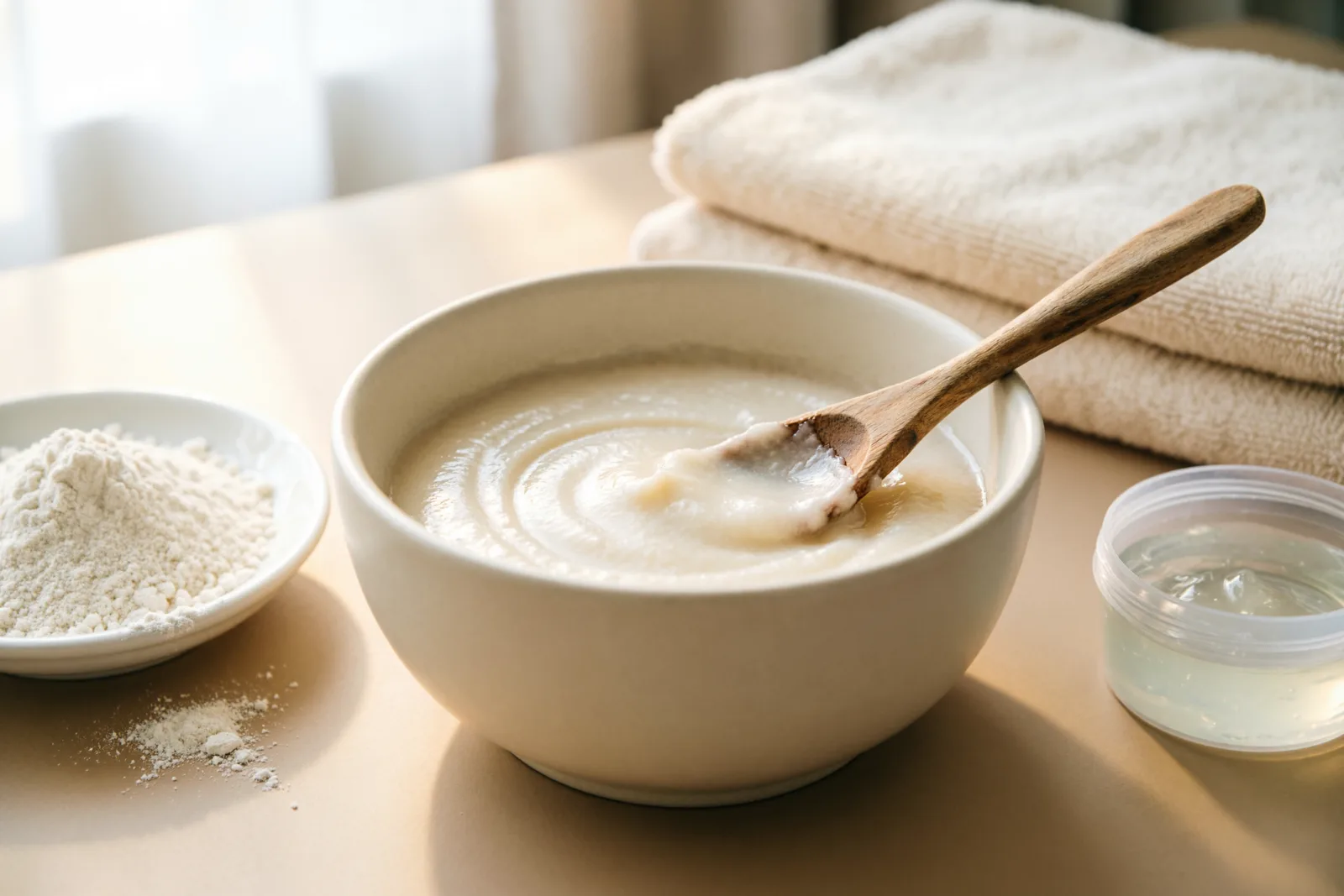
- Ingredients: 1 teaspoon of very finely milled rice powder and 2 tablespoons of pure, fragrance-free aloe vera gel.
- Method: Whisk into a fluid lotion. Glide across damp calves and forearms with minimal friction, then rinse cleanly.
How to Exfoliate Without Compromising Your Skin Barrier
Over-exfoliation is the most common mistake with DIY body scrubs. Follow this step-by-step technique for healthy, resilient skin:
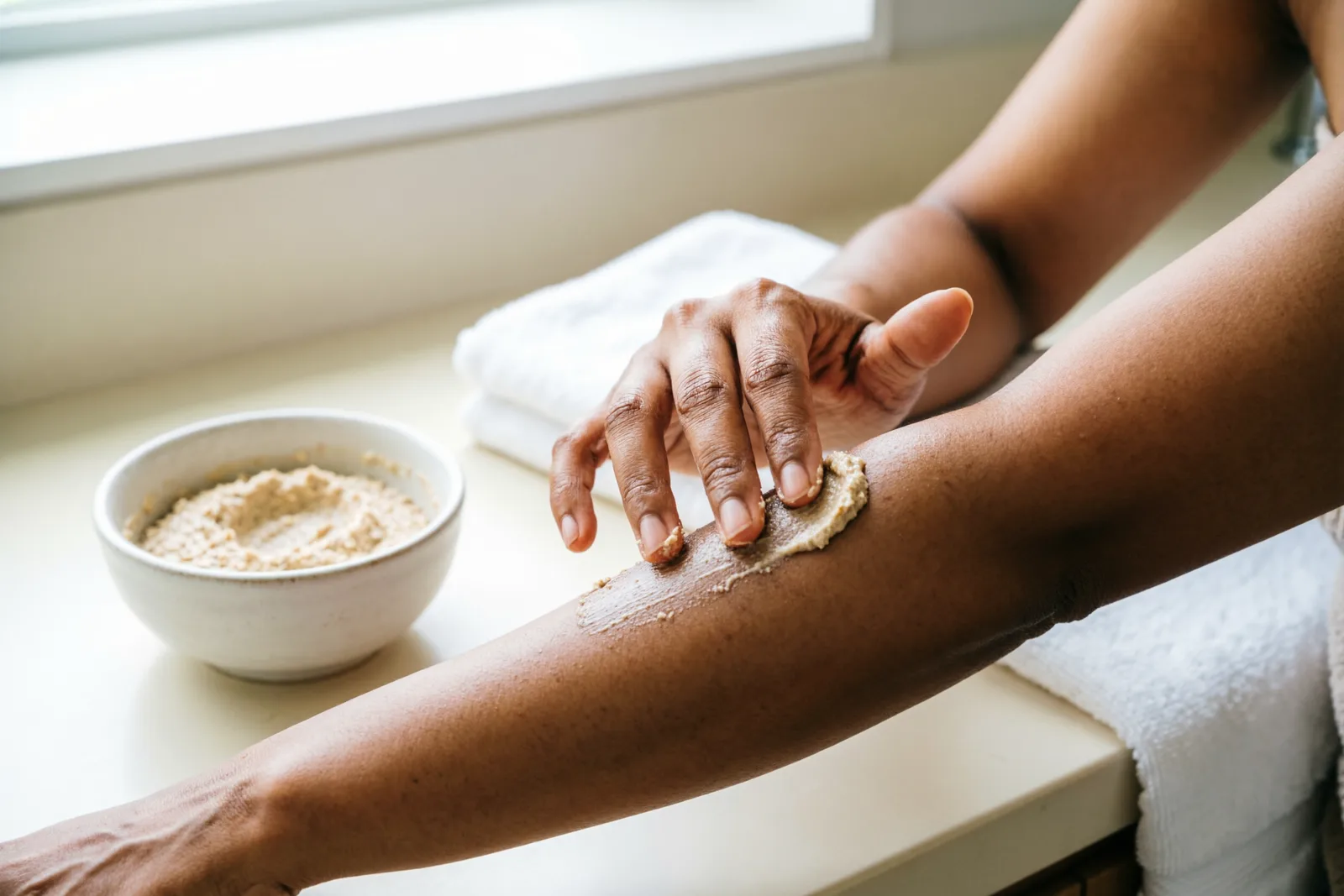
- Pre-Soak: Soften the skin under lukewarm shower water for 3 to 5 minutes before applying your scrub.
- Use Fingertips Only: Never combine DIY scrubs with abrasive plastic loofahs, dry brushes, or rough exfoliating gloves. Fingertips allow you to gauge pressure accurately.
- Keep It Brief: Massage each targeted area for no more than 30 seconds.
- Lock In Hydration: Pat dry gently with a towel and seal in moisture within 3 minutes using a fragrance-free body lotion containing ceramides, shea butter, or squalane.
- Frequency: Limit manual scrubbing to once every 7 to 10 days.
Important Safety Precautions
- Never Use on the Face: Body scrub particles are too coarse for delicate facial tissue and will cause micro-tears and flare rosacea.
- Avoid Inflamed Skin: Never scrub over active body acne, folliculitis, cuts, rashes, sunburns, or freshly waxed/shaved skin.
- Avoid Kitchen Irritants: Strictly avoid coarse sea salts, baking soda (which has a damaging alkaline pH of ~9), raw citrus juice, and undiluted essential oils.
- Shower Safety: Oil-based scrubs leave bathtubs dangerously slick. Wipe down shower tiles thoroughly after use to avoid falls.
Conclusion
A homemade body scrub offers a rewarding, tactile addition to your weekly shower routine when approached with mindfulness and fine, gentle textures. Remember that skin barrier health always takes priority over aggressive scrubbing.
By keeping your recipes fresh and simple, using featherlight pressure, and following with a barrier-restoring moisturiser, you can enjoy velvety-smooth skin without redness or irritation.
Frequently Asked Questions
Can I use these homemade body scrub recipes on my face?
No. Facial skin is significantly thinner than body skin and possesses a denser network of sebaceous glands and delicate blood vessels. Granular pantry scrubs can cause micro-abrasions, redness, and broken capillaries on facial skin.
Will a body scrub remove an unwanted suntan?
No. A suntan is the result of melanin produced deep in the basal epidermal layer in response to DNA damage from UV exposure. Scrubbing only removes loose surface corneocytes; aggressive scrubbing over tan skin will trigger inflammation and deeper post-inflammatory pigmentation.
Can I store leftover homemade scrub in the refrigerator?
No. Fresh kitchen blends lack broad-spectrum antimicrobial preservatives. In a warm, humid bathroom environment, unrefrigerated or stored scrubs become breeding grounds for bacteria and mold within 24 to 48 hours. Mix only single-use portions.
Should I scrub before or after shaving my legs?
If your skin tolerates it, very gentle exfoliation 24 hours before shaving can loosen dead skin around hair follicles. Never scrub immediately after shaving, as the razor has already exfoliated the skin and additional friction will cause severe razor burn.
Can body scrubs help clear back or chest acne?
No. Scrubbing over active breakouts spreads bacteria, ruptures pustules, and worsens follicular inflammation. For body acne, opt for leave-on chemical exfoliants containing salicylic acid (BHA) or benzoyl peroxide wash instead of granular scrubs.
Related Articles
Explore more insights and stories from this category.
How to Apply Under Eye Cream: Where, When and How Much
Learn how to apply under eye cream with the right amount, placement and timing. See how to use under eye cream gently and avoid common skincare mistakes.
Benefits of Vitamin C for Skin: What Really Works?
Explore the benefits of vitamin C for skin, from antioxidants to uneven tone. Learn about vitamin C serum benefits, safe application and common mistakes.